




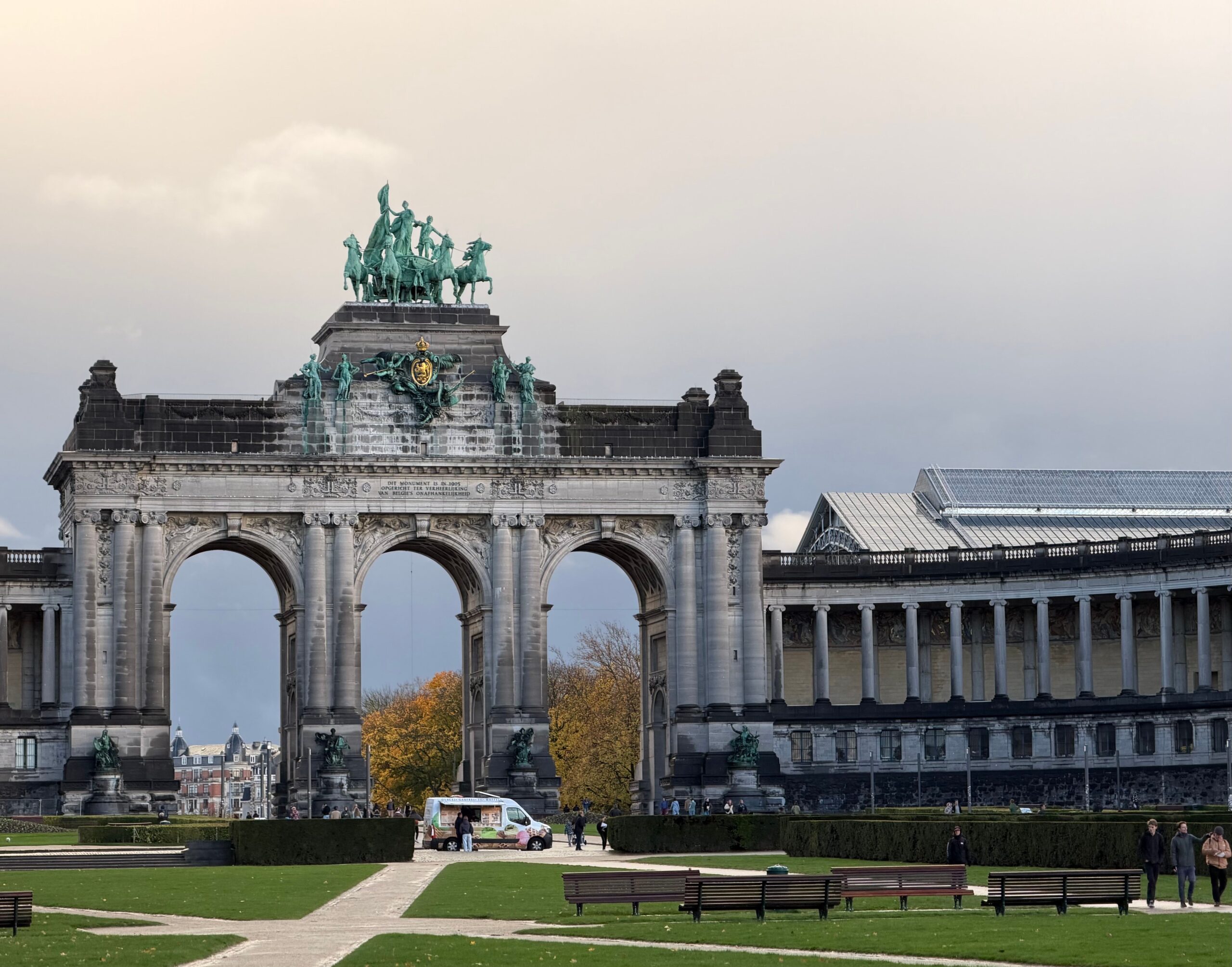
From taxes and salaries to driving rules, transport and everyday administration, these are the Belgian changes and deadlines worth knowing about this autumn.
September has always felt like a reset in Belgium. Summer holidays come to an end, schools reopen, offices fill up again and the country returns to its familiar rhythm. This year, however, there is another reason to pay attention.
A series of changes, new rules, deadlines and reforms are coming into effect or becoming relevant over the autumn months, affecting everything from taxation and employment to driving, public transport and everyday life.
Not every measure will affect every resident. Some apply specifically to employees, business owners, non-residents or people receiving certain benefits. Others will be noticeable to almost anyone who drives, travels by train or attends events in Brussels. But taken together, they provide a useful snapshot of what is changing in Belgium as the country moves into the final months of 2026.
Here are 15 developments worth knowing about.
1. Non-residents can file their Belgian tax return from September
For people who earn Belgian income while living abroad, or who live in Belgium only temporarily, the non-resident income-tax return opens on 3 September 2026. The deadline is 20 November 2026. The Belgian tax administration says the return can be completed online through MyMinfin. (Belgium Finance)
This is particularly relevant to international professionals, cross-border workers, property owners and others with Belgian-source income who do not fall under the standard resident tax return system.
2. The securities-account tax has doubled
One of the more significant financial changes already introduced in 2026 is the increase in Belgium’s annual tax on securities accounts from 0.15% to 0.30%.
The new rate applies to reference periods ending from 1 June 2026, following publication of the Programme Law. The tax concerns securities accounts above the applicable threshold and can therefore be particularly relevant to investors with substantial portfolios. (FPS Finance)
For high-net-worth residents and investors, this is one of the changes worth discussing with a financial adviser rather than overlooking.
3. Some salary-related thresholds are being indexed
From 1 September, Belgium’s social-security administration is adjusting several thresholds following the latest index increase.
Among them are ceilings used when calculating maximum deductions from certain supplementary unemployment-related benefits. The indexed figures rise from their previous levels from September onwards. (Belgian Social Security)
These are technical changes rather than something most employees will notice directly on their payslip, but they matter for people receiving particular social benefits.
4. Flexi-job pay is changing
For flexi-jobs in the hospitality sector, the minimum hourly flexi-salary rises from 1 September 2026 to €12.11, with €0.93 per hour in flexi holiday pay, bringing the total minimum to €13.04.
A specific maximum is also being introduced for hospitality flexi-pay: €21 per hour, or €22.61 including holiday pay. (Belgian Social Security)
For restaurants, cafés, hotels and workers looking for flexible additional employment, this is a particularly practical change.
5. The social work bonus is being recalculated
Another September change concerns Belgium’s social work bonus, which reduces employee social-security contributions for lower-paid workers.
From 1 September, the income thresholds and corresponding reduction amounts are adjusted following indexation. The precise calculation depends on salary and employment status, meaning the impact will vary considerably between workers. (Belgian Social Security)
The broader significance is that Belgium is continuing to adjust the financial gap between gross pay, social contributions and take-home income.
6. Belgium’s traffic rules are changing
Drivers should pay particular attention to 1 September.
Several changes to Belgian road-traffic legislation take effect at the same time as the new Criminal Code. The federal Mobility Ministry says these include changes concerning traffic offences and penalties. (Mobility)
However, there is an important distinction: the much-publicised new Code de la voie publique, which was originally due to replace the 1975 Highway Code on 1 September 2026, has been postponed until 1 June 2027. (Mobility)
In other words, September brings changes for drivers—but not the complete replacement of the Highway Code that had originally been announced.
7. Belgium’s new Criminal Code arrives
The new Belgian Criminal Code enters into force on 1 September 2026, bringing a major overhaul of criminal legislation.
The reform has consequences beyond criminal courts, with various other laws and regulations being adjusted to align with the new code. (Belgium News)
For ordinary residents, this is unlikely to change daily behaviour dramatically, but it represents one of Belgium’s most significant legal reforms of the year.
8. Some Belgian workers have new employment rules
A series of labour-law reforms already entered into force on 1 June 2026, including changes to voluntary overtime, work regulations, part-time employment and notice periods for certain new employment contracts.
For contracts beginning from 1 June, for example, the employer’s notice period is capped at 52 weeks once an employee reaches 17 years of seniority. The reform also changed the minimum weekly working time for many part-time contracts from one-third to one-tenth of full-time hours. (Belgium Employment)
Although these changes technically began before autumn, September is the first major return-to-work period in which many employees and employers will be navigating the new framework.
9. Companies face an important September tax deadline
For companies with balance-sheet dates falling between 31 December 2025 and 28 February 2026, the Belgian corporate-tax filing deadline is 30 September 2026.
Companies can file through Biztax, which is also accessible via MyMinfin. (FPS Finance)
For entrepreneurs and business owners, September is therefore an important month for tax administration, even if the deadline does not apply to individual employees.
10. Small businesses have a September VAT deadline
Small businesses considering Belgium’s VAT exemption scheme have until 15 September 2026 to opt into the system if they want it to apply from 1 October.
The scheme is subject to eligibility requirements, including the applicable turnover threshold. Applications are handled through the e604 application in MyMinfin. (FPS Finance)
For freelancers and small-business owners, this is another administrative deadline worth putting in the diary.
11. A change to disability-benefit rules is planned for September
The federal government has proposed increasing the income threshold used when calculating the integration allowance for people with disabilities.
The proposed change would increase the exemption for replacement income to €9,353.67 from September 2026, although the measure was still going through the formal approval process when announced. (Belgium News)
Because this is a proposed measure rather than a fully confirmed rule, readers affected by it should check the latest official information before relying on the new threshold.
12. Some Belgian train services are expanding
There is good news for some commuters.
From September 2026, SNCB plans to increase weekend service on the suburban network around Charleroi, with the S62 and S63 services operating hourly on Saturdays instead of every two hours. Around Antwerp, a new S33 service between Antwerp, Herentals and Mol will operate hourly at weekends. (la SNCB)
For people commuting without a car, relatively small timetable changes can make a significant difference to weekend travel.
13. Brussels events are going reusable
From 1 September, the City of Brussels will prohibit disposable cups at events held in public spaces. Organisers will have to provide reusable cups and operate a system for their collection, cleaning and reuse, with a minimum return rate of 90%. (Brussels)
For visitors, the change should be simple: if you’re heading to an outdoor event in Brussels this autumn, expect reusable cups rather than disposable ones.
14. Mobility Week returns—and Brussels goes car-free
From 16 to 22 September, Brussels will once again host Mobility Week.
The biggest day is Car Free Sunday on 20 September, when the Brussels-Capital Region will close its roads to motorised traffic from 9:30am to 7pm, with specified exemptions. Public transport will be free throughout the day. (Brussels)
For residents, it is both an annual tradition and a useful reminder of how quickly the city can feel different when cars disappear from its streets.
15. Brussels Design Week replaces Brussels Design September
The annual design festival returns on 24 September, but with a new identity.
Twenty years after its launch, Brussels Design September becomes Brussels Design Week, running until 4 October and bringing together exhibitions, talks, debates and events covering furniture, architecture, objects, industrial design and graphic design. (Brussels)
For Together readers interested in design, architecture and contemporary Belgian culture, it is one of the more interesting additions to the autumn calendar.
What This Means for People Living in Belgium
The important thing is not to assume that a headline about a new Belgian law applies to everyone. Check whether the measure affects your employment status, income, residence, region or personal circumstances—and when in doubt, use the relevant official government service for the latest information.
This article is intended as a general guide and was researched using official Belgian government and public-sector sources available in August 2026. Rules and implementation dates can change, so readers should verify details with the relevant authority before making financial, employment or legal decisions.
Further Reading
The Best Foods for Brain Health
Stay Connected
Subscribe to the Together Magazine newsletter for thoughtful features, personal development insights, cultural recommendations, museum exhibitions, events in Brussels and Belgium, and the latest stories delivered directly to your inbox.