







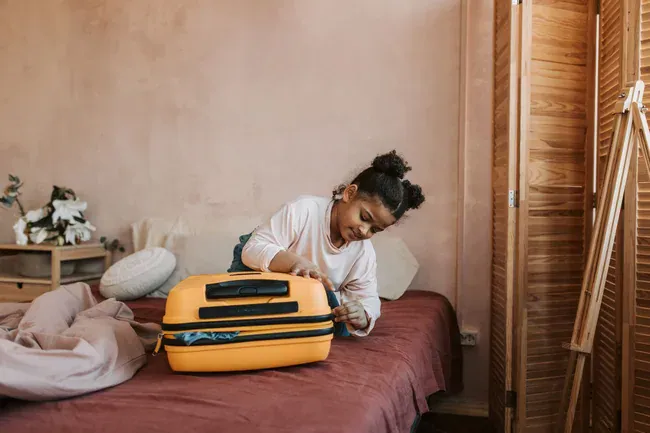
Give the child a say in what travels and what lives in both homes. A favourite book may belong in the overnight bag, while a second toothbrush can remove a small but recurring worry.
Sort by the next morning
Start with the first thing the child will do after waking up. If it is a school day, walk through breakfast, getting dressed and leaving the house. This catches the overlooked things: the library book due back, the instrument needed for a lesson, the swimming kit that lives on a hook behind a door.
For a weekend the list may be quite different. Leave space for the child to choose one thing simply because they want it.
Agree what never goes in the bag
Where possible, keep inexpensive daily items at both addresses. If there is only one important item, decide which adult is responsible for checking it. A child can choose their favourite jumper without having to remember a school deadline or relay a difficult message between adults.
Give the handover note to the other adult directly. Keep it practical: what came along, what is needed next and where the missing boot turned up.
Try the list on the way back
A list that works in one direction can fail on the return journey. A wet towel belongs somewhere different from a clean one. A drawing made that weekend might need a folder.
After the first round trip, ask what was easy to find and what felt like a nuisance. A child who would rather point than write can draw a tiny picture next to an item. The aim is a bag they recognise and a departure nobody has to supervise in a panic.
Further reading in Together
- Adult Children Moving Back Home
- A Weekly Reset That Leaves Room for the Life You Want
- How to Host a Simple Supper Without Making It a Project
Subscribe to the Together newsletter for more stories from Belgium.