




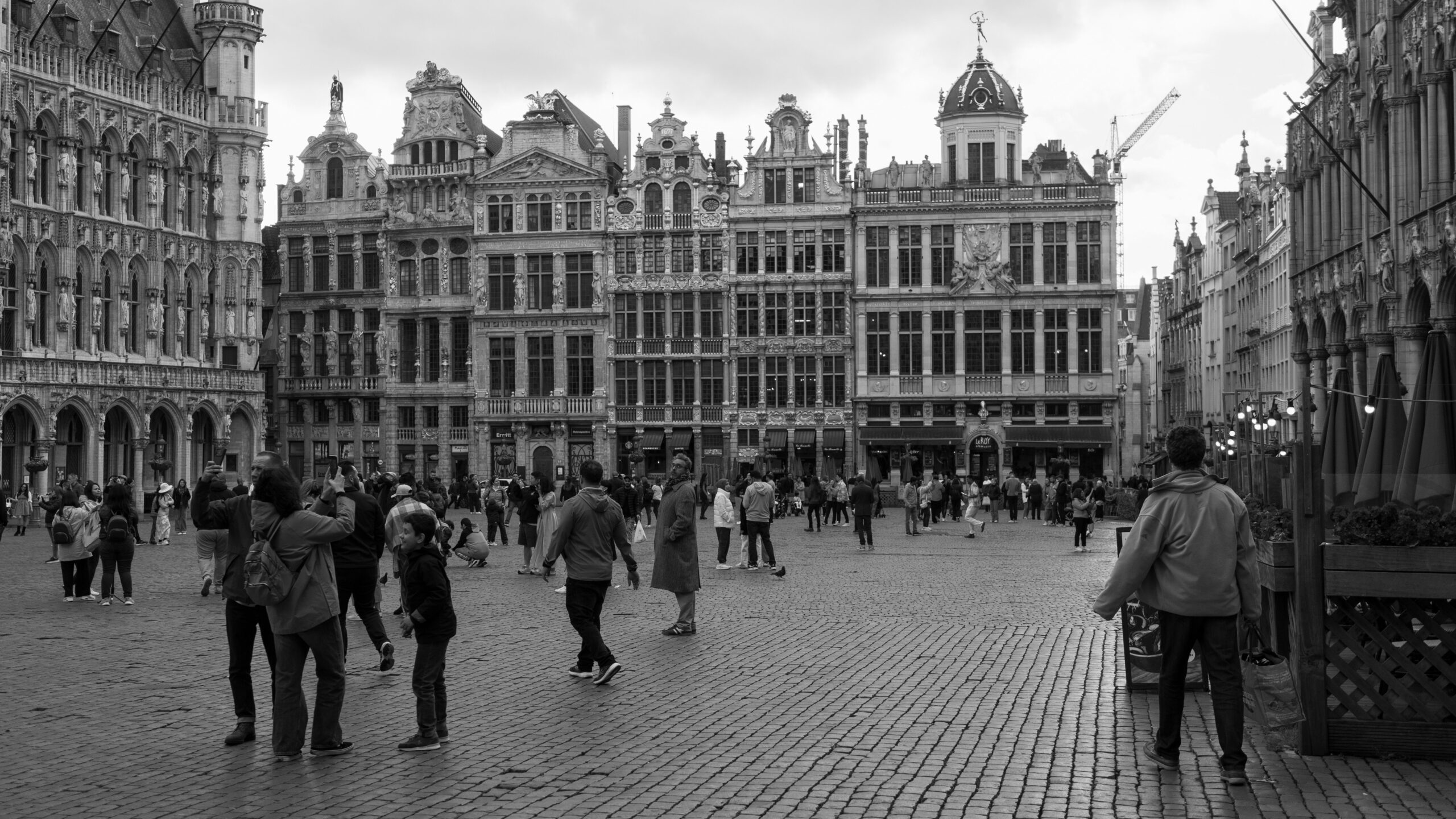
Belgium has begun a difficult round of budget negotiations, with the Federal Government looking for around €10 billion. From company cars and healthcare to taxes and the public sector, some of the ideas on the table could have a very real impact on everyday life.
Belgium’s politicians have returned from the summer with an uncomfortable problem waiting for them: the country’s finances.
Prime Minister Bart De Wever has begun negotiations over the 2027 federal budget, with his coalition facing the task of finding around €10 billion through a combination of savings, reforms and potentially new revenue.
Exactly where that money will come from is now the subject of an increasingly difficult political battle.
The €10 billion figure does not mean that the government has already decided to impose €10 billion in new taxes or cuts. Nor does it mean that every proposal currently appearing in the Belgian press is about to become reality. Negotiations are underway, and the final package could look considerably different.
But the scale of the problem means difficult choices are coming.
And some of them could eventually affect everything from company cars and public-sector employment to healthcare and the taxes people pay.
Why does Belgium need so much money?
Belgium has been spending considerably more than it receives.
According to the European Commission’s latest economic forecast, Belgium’s general government deficit is expected to reach around 5.2% of GDP in 2026, while public debt is forecast to rise to approximately 110.5% of GDP.
The outlook does not improve automatically. Without sufficient changes, the Commission expects the deficit to increase to 5.4% in 2027 and debt to reach 112.8% of GDP.
Belgium is already subject to the European Union’s Excessive Deficit Procedure, meaning it is under pressure to bring its public finances back towards European fiscal requirements.
There are several reasons for the deteriorating picture.
An ageing population is increasing pressure on pensions and healthcare. Interest payments on Belgium’s large national debt are becoming more expensive. Defence expenditure is rising, while economic growth remains relatively weak.
The European Commission expects the Belgian economy to grow by just 0.7% in 2026 before improving slightly to 0.9% in 2027.
That combination—slow growth, high debt and persistent deficits—is why the government cannot simply wait for the problem to disappear.
The €10 billion question
The Federal Planning Bureau has reportedly prepared around 250 possible measures for politicians to consider.
That does not mean 250 measures are being introduced. They are options showing where money could theoretically be saved or raised.
And some of the numbers demonstrate why the political debate is becoming so contentious.
One possibility is changing Belgium’s VAT system. According to calculations reported as part of the budget discussions, simplifying VAT rates could potentially generate billions in additional revenue.
Another option would be greater taxation of wealth. Depending on how such a measure was designed, estimates presented to negotiators suggest it could also raise several billion euros.
But tax increases are politically explosive.
MR leader Georges-Louis Bouchez has argued that Belgium should instead go further on reducing expenditure. This week, he proposed finding as much as €17 billion in savings without introducing new taxes, although detailed calculations supporting the entire figure have not been published.
That sets up one of the fundamental arguments of the negotiations.
Should Belgium ask taxpayers to contribute more, or should the state spend considerably less?
Could your company car be affected?
One subject that will immediately interest many Belgian professionals is the company car.
Belgium’s company-car system has long been unusually important because employers can provide cars as part of remuneration packages under favourable tax conditions.
That makes any attempt to reform the system politically sensitive.
The Planning Bureau’s options reportedly include gradually reducing the difference in tax treatment between company cars and ordinary salaries. Estimates cited during the budget discussions suggest changes to company-car treatment could reduce the cost to the government by €2.8 billion by 2030, with another €700 million potentially associated with fuel and charging cards.
Separate proposals from several federal ministries have also called for reducing fossil-fuel subsidies, including support connected to company cars.
None of this means your company car is about to disappear.
In fact, CD&V leader Sammy Mahdi has already strongly opposed eliminating the company-car system, demonstrating how difficult such a reform would be within the coalition itself.
But for the large number of professionals whose compensation packages include a vehicle, this is one part of the negotiations worth watching closely.
Healthcare could become another battleground
Healthcare is another area where potentially enormous sums are involved.
One of the options reportedly calculated by the Planning Bureau involves increasing the amount patients themselves contribute towards healthcare costs. Depending on how such a policy were structured, the theoretical savings could run into billions.
Again, this is an option, not an agreed government decision.
Bouchez has separately argued that substantial savings can be found by tackling what he describes as abuse and inefficiency within the healthcare system.
The political difficulty is obvious. Belgium’s healthcare system is one of the public services residents encounter most directly. Large reductions may look attractive on a spreadsheet, but changes to reimbursements or patient contributions quickly become tangible at the doctor’s office, pharmacy or hospital.
The eventual question will therefore be not only how much healthcare costs the state, but which savings can be made without transferring an unreasonable part of that cost to patients.
What about civil servants and public services?
The public sector is also under scrutiny.
Possible measures include restricting recruitment and salary growth within government departments. Planning Bureau estimates cited in the current discussions suggest measures in this area could generate savings of around €1.6 billion.
Bouchez has proposed going significantly further, arguing for a substantial reduction in the number of civil servants as part of his €17 billion savings plan.
He has also suggested closing some train stations and courthouses and reducing the number of politicians and ministers.
These are political proposals rather than decisions.
But they illustrate something important about the coming negotiations: saving €10 billion without increasing taxes requires finding very large sums elsewhere.
And once cuts reach that scale, it becomes difficult to make them entirely invisible to the public.
Why not simply tax the wealthy?
That will inevitably be one of the questions asked during the negotiations.
The Planning Bureau’s menu of possibilities reportedly includes a wealth tax that, depending on its design and rates, could theoretically generate between approximately €5.5 billion and €11 billion.
On paper, that appears to solve much of the problem.
In reality, introducing such a tax would raise complicated questions about what constitutes wealth, which assets would be included, how valuations would work, possible exemptions and the risk of capital moving elsewhere.
Belgium has already been introducing other fiscal measures. The European Commission points to measures involving VAT, capital gains and taxation of the financial sector as contributing to government revenues.
The political argument is therefore not simply whether wealthy people should pay more. It is also about how much additional taxation Belgium’s economy can absorb and how the burden should be distributed.
Why Belgium cannot ignore the problem
It is tempting to see arguments about deficits as something that matters mainly to economists and finance ministers.
Debt makes the issue much more concrete.
When governments borrow money, they pay interest. As debt grows, interest payments can consume an increasingly large share of the budget—money that cannot then be spent on healthcare, transport, education, tax reductions or other priorities.
The European Commission has warned that Belgium faces high medium-term fiscal sustainability risks.
Its longer-term projections are particularly striking. Under a baseline scenario assuming broadly unchanged fiscal policy, Belgium’s debt could rise to around 137% of GDP by 2036.
That is why the current negotiations matter even if many of the proposals being discussed never become policy.
Doing nothing also carries a cost.
Flanders has its own budget problem
The federal government is not alone.
This week, the Flemish Government also began looking for approximately €2 billion in additional savings as it attempts to meet its own budget objectives for 2027.
That means residents of Flanders could potentially feel the consequences of budget consolidation at more than one level of government.
It also illustrates one of the complications of discussing “Belgium’s budget”. Belgium’s federal structure divides responsibilities and spending between federal, regional and community governments.
The €10 billion federal negotiations are therefore only part of the country’s wider fiscal picture.
So who will actually pay?
For now, there is no definitive answer. That is perhaps the most important thing to understand about the current debate.
Company-car reform is being discussed, but has not been agreed. Healthcare savings are possibilities, not confirmed changes. Wealth taxation is an option. Cuts to government departments, stations and courthouses are political proposals.
Over the coming weeks, those possibilities will be negotiated between coalition parties with very different ideas about taxation and public spending.
De Wever has described the eventual compromise as a “budget lasagna”: different layers intended to give each coalition partner something it can accept.
For Belgian residents, the details of those layers will matter considerably more than the metaphor. The government is expected to present its plans to parliament by 13 October, before submitting its budgetary plan to the European Commission.
Until then, dramatic figures should be treated carefully.
But one thing already appears clear. Finding €10 billion without touching taxes, benefits or public services in some form will be extremely difficult. The real political battle is therefore no longer simply about whether Belgium needs to improve its finances.
It is about who will be asked to make the sacrifice.
Further Reading
Four Live Events To See In Belgium This October
Stay Connected
Subscribe to the Together Magazine newsletter for thoughtful features, personal development insights, cultural recommendations, museum exhibitions, events in Brussels and Belgium, and the latest stories delivered directly to your inbox.