




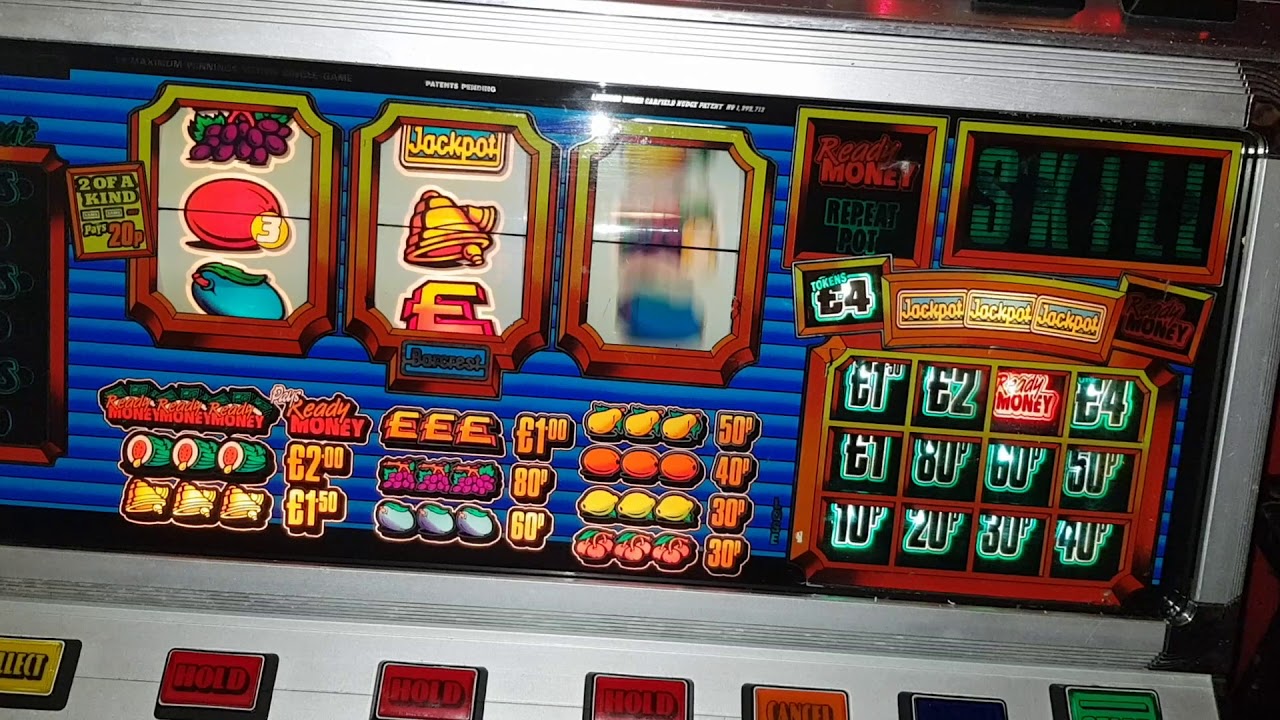
It is a story about how two young men, back in the 1980s England, realised they had cracked a potential mine goldmine… beating the fruit machines.
“Beating the Machines” spells out how James Drew, a lifelong, Brussels-based journalist and writer, and his best buddy, Rich, hit the jackpot on the machines to an extent that they were raking in a substantial sum of money each week.
But this entertaining and well-written book also carries a slightly disturbing sub-plot, warning of the dangers of gambling addiction.
Gambling disorder s identified by a pattern of repeated and ongoing betting and wagering that continues despite creating multiple problems in several areas of an individual’s life.
Individuals in any age group may suffer from gambling disorder. Those who suffer from gambling disorder have trouble controlling gambling.
That is according to the American Psychiatric Association but Drew would probably be among the first to agree with such a definition.
At the height of their gambling and fruit machine playing days both he (and his buddy) will readily admit to clearly identifying with all the symptoms of gambling addiction.
Drew is now middle aged, resettled in his home town, and able to look back on such activities with a certain nostalgia.
But it was back in the 80s when, then aged just 17, he was living in his native York and recalls being “very much addicted to fruit machines”.
For someone who grew up in pubs (his parents were pub landlords) that should come as no great shock maybe, not least as most pubs in the UK back then heavily featured fruit machines as a principle source of entertainment.
Drew makes no attempt to conceal the scale of his addiction at this stage, admitting, albeit only on the odd occasion, to even “stealing” in order to support his habit.
He recalls how in 1988 his life “changed forever” because he – and best buddy Rich – twigged how to play the machines “better than anyone else alive.”
A “very happy childhood” included, from the age of six or seven, being transfixed by fruit machines – “fruities” in the jargon – in his parents’ various pubs that as far as he could see “seemed only to pay money out.”
The UK, he points out, still has some of the world’s strictest laws on fruit machines – they are still obliged to pay out a minimum of 70 percent of every penny that is put into them. But, crucially, this applies across the lifetime of the machine, so it will pay out its 70 percent, but only as that percentage of its takings over its lifetime.
In any event, Drew says that from 1980 he was hooked even if, back then, the jackpot was no more than one pound and then paid out as “tokes” or tokens.
But for the pair these “gaudy, colourful, flashing” boxes in the corner of the pub bar really were a “golden goose”.
They were, he said, a “different breed from normal punters” but he also concedes all this came at a cost with Drew stating he was playing on the machines when “I was supposed to be studying hard for my A levels”.
Fast forward a few years, and the two pals, joined by Drew’s uncle Phil, later took to the highways of the UK to find that Britain’s seaside amusement arcades provided richer pickings still than the local boozer.
The arcade machines were pumping out so many coins that he recalls he and his mate having to “vigorously scrub” their hands to get them clean after coining it in.
You have to fast forward to much later, 2001, that he realised “my final time proper on the machines was drawing to a close.”
That was when he landed a job in Brussels for a weekly newspaper and he found his time consumed in the wonderful world of work ..and not fruit machines.
He asks, “Would I have liked to have chucked it all in and hit the road (gambling again) full time?
“You bet I would.”
But he chose not to and says, “It is all done and dusted for both of us now.”
Looking back, Drew, who worked for publications in Brussels before returning to the UK a year ago, admits, “when you consider I started in 1989 and played my last machine in anger in 2014 that is 25 years during which I enjoyed more fun and had more joy than I believe I have ever experienced in my entire life, before or since.”
It is a rip-roaring and brutally honest read, reviving fond memories of life in the UK in the 1970s and 80s and serving, to an extent, as a salutary reminder and warning of the potential dangers of gambling (in any of its many guises). Recommended.
- “Beating the Machines” is available online from Amazon and Waterstones
- Photo credit: Cash Counter