









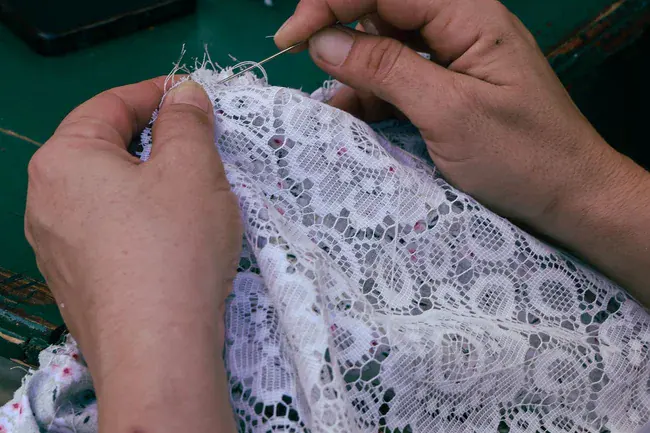
Turn the garment over. Run a finger along the seam, look at where the strap meets the cup and check whether the fastening is easy to reach. The inside can answer questions that a changing-room mirror cannot.
Follow the line your skin will meet
Lift the garment by its band and follow the inside edge from the fastening to the cup. Where does one material join another? Is there a folded edge, an exposed seam or a change from mesh to lace?
Try it on if the shop permits. An attractive detail deserves a second look when it sits exactly where a bag strap or the arm of a chair will press.
Use your own clothes as the test
Bring the shirt or dress you have in mind. Move as you would in it: reach for a shelf, sit down, lean forward and put your coat back on. Then check whether the fastening and adjusters are manageable for you.
Ask a fitter for a different style if something catches. The garment has to work with the person who wears it; a number on a label cannot decide that question.
Ask about the making and the care
In Together’s archive interview, Catherine Pérèle described the attention that goes into individual components. The company’s history of its Paris atelier dates Simone Pérèle’s workshop to 1948 and identifies her training as a corset maker. Construction is a practical buying question today as well.
Look at the care label and decide whether the routine suits your household. A beautiful piece is more likely to earn its place if it works on an ordinary weekday.
Further reading in Together
- What Makes Belgian Fashion Different
- Balenciaga and Edith Dekyndt at Bozar
- Brussels Repair Cafés: What to Bring on Your First Visit
Subscribe to the Together newsletter for more stories from Belgium.