







A favourite jumper with a loose seam, a lamp that has stopped working, a bag with an awkward zip: small faults can leave useful things stranded in a cupboard. Brussels Repair Cafés offer a place to explore whether an item can be repaired, with volunteers helping you understand the job.
As winter clothes and household comforts return to daily use, it is a good moment to choose one neglected object and investigate its next step. Your first visit needs a little preparation. Think of it as a shared workshop, with time to learn and the possibility that the object will still come home unrepaired.
Brussels Repair Cafés: choose the right session
Start with Repair Together’s directory of Repair Cafés and check the individual organiser’s current information. Choose by the repair skills available as well as the journey. A nearby session is not automatically the right place for every object, and you do not have to attend one in your own commune.
According to the network’s first-visit guidance, many sessions operate in arrival order, while some require registration. Confirm the date, address, admission arrangements and relevant workshop before leaving. Do not build a Saturday around an old social-media announcement.
For English-speaking residents, send a short enquiry about language arrangements. Say what you want to bring and ask whether someone can discuss it with you in English. Availability depends on the people attending; a translated web page is not a guarantee of an English-speaking repairer.
Choose one manageable object
The network’s Repair Café frequently asked questions describes skills ranging from sewing to electrical repairs, computers, bicycles and woodwork. The mix varies. A broken zip needs different expertise from a faulty toaster, so describe the problem before packing your bag.
Start with an item you can transport comfortably and take home again. Photograph the fault if it is visible. Write down when you first noticed it and what happens now: a switch clicks but nothing lights up, for example, or a seam opens whenever you lift your arm. That is more useful than trying to name a component you have not identified.
Leave dangerous or unsuitable equipment out of your first visit. Repair Together excludes certain hazardous items and explains that large appliances are generally beyond these workshops’ scope. Ask the organiser about an uncertain object instead of carrying it across Brussels on the assumption that someone will accept it.
Pack the things that help
Bring the accessories needed to understand the fault, such as the correct power cable, together with any instructions you still have. If a repairer has already identified a replacement part, check whether you should bring it. The network says Repair Cafés do not keep a general stock of spare parts.
Present the object clean and easy to examine. For clothing, empty pockets and make the damaged area accessible. Our guide to caring for wool and knitwear explains why the garment’s own care label should guide cleaning; a workshop appointment is no reason to improvise a risky wash.
Keep small detached pieces in a labelled container and photograph how they were attached if you know. A button or fastening left on the kitchen table cannot help the person examining the garment. Pack a bag large enough for the object’s return journey, whether the repair succeeds or not.
Stay, watch and ask
A Repair Café is a participatory activity. Repair Together’s explanation of how shared repair works makes clear that visitors and volunteers work together; you do not need to arrive with your own technical expertise. Plan to remain with the object and follow the repairer’s guidance.
Ask what they are checking and what you could recognise next time. If you want to take notes or a photograph of a useful step, ask first. Allow room for other visitors, and remember that a queue may close before the advertised finishing time.
Volunteer help does not guarantee a fix. There may be too little time, a missing part or a fault outside the available skills. Ask what the useful next step would be, and take your object home. Repair Together describes contributions as voluntary; check the local session’s arrangements.
Let one visit change one habit
Before buying a second-hand item, it can help to think about maintenance as well as appearance. Together’s guide to browsing the Marolles flea market offers practical questions to ask while looking. A Repair Café should not become a promise that every uncertain purchase can be rescued.
If you enjoy the community side, enquire about helping at a future session. Our guide to starting volunteering in Brussels can help you judge what commitment fits. For now, one object and one confirmed appointment are a useful beginning.
Join Together’s newsletter for more practical ideas for life in Belgium.
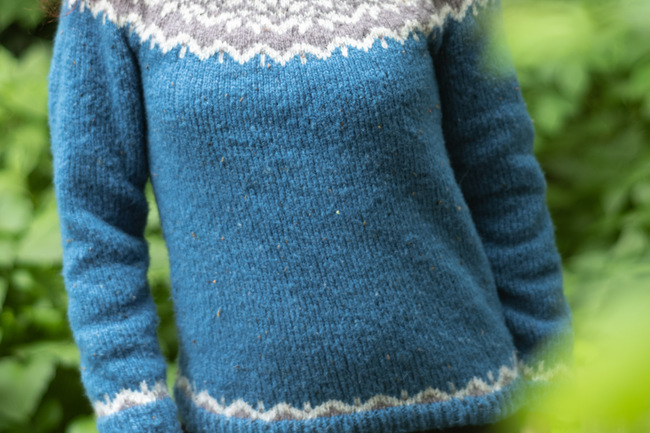
Featured photograph: detail of an Icelandic sweater, © Kyle Cassidy / Wikimedia Commons, CC BY-SA 4.0. Cropped; this crop is shared under the same licence. Illustrative image, not a Repair Café session.