







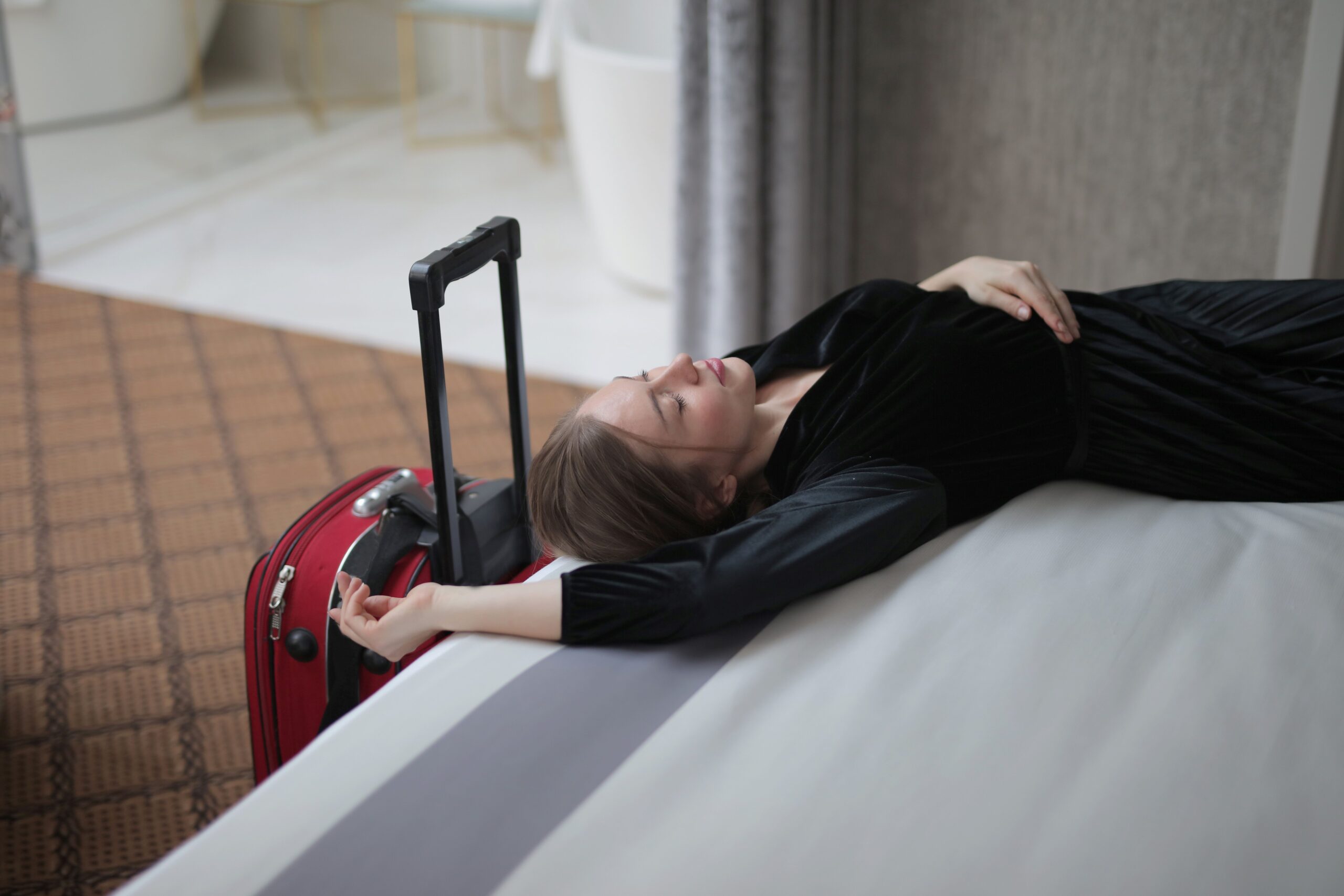
Jet lag can take the shine off the first few days of a holiday or business trip. From adjusting your sleep before you leave to using daylight strategically, here is what actually helps.
You arrive somewhere you’ve been looking forward to for months. The sun is shining, dinner is booked and there is an entire city outside your hotel. Unfortunately, your body thinks it is 3am.
Jet lag is more than simply being tired after a long flight. It happens when rapid travel across time zones leaves your internal body clock out of sync with the local time. Sleep can become difficult, concentration suffers, appetite may change and you can find yourself wide awake in the middle of the night and exhausted in the afternoon.
The further you travel across time zones, the greater the potential disruption. Travelling east is also often harder than travelling west because, for most people, shifting the body clock earlier is more difficult than delaying it.
You cannot guarantee a completely jet-lag-free journey. But you can make the adjustment considerably easier.
Start adjusting before you leave
If you’re crossing several time zones, one of the most effective things you can do happens before you reach the airport.
Begin moving your sleep schedule towards your destination a few days before departure.
If you’re travelling east, try going to bed and waking up a little earlier. If you’re travelling west, move bedtime and waking slightly later.
You don’t have to immediately start living on New York or Tokyo time from Brussels. Even shifting your schedule by an hour can reduce the adjustment waiting for you at the other end.
The CDC suggests moving sleep roughly an hour towards the destination time during the two or three days before travelling when practical.
It is also worth arriving well rested. Deliberately staying awake the night before a flight in the hope that you’ll sleep on the plane can backfire spectacularly. Sleep deprivation and jet lag are separate problems, and arriving with both is unlikely to improve your first day.
Switch mentally to destination time
Once you board the plane, change the time on your phone or watch to your destination. Then start thinking according to that clock.
If it is nighttime where you’re going, try to sleep. If it is daytime, staying awake may help you begin adjusting.
The same principle can be applied to meals and light exposure. You are essentially giving your body cues that a new schedule has begun.
Of course, this is easier said than done when the cabin lights come on for breakfast while your body insists it is midnight. You don’t need to execute the plan perfectly. The aim is simply to begin moving in the right direction.
Use light strategically
If there is one part of jet-lag management worth understanding, it is light.
Light is one of the strongest signals used by the body’s circadian system to determine when it should be awake and when it should prepare for sleep. But more light isn’t always better. Timing matters.
Broadly, morning light tends to shift the body clock earlier, while evening light tends to shift it later. That means the ideal timing depends on where you have travelled, how many time zones you crossed and what your internal clock thinks the time is.
For complicated long-haul journeys, this can become surprisingly technical. The CDC recommends considering a jet-lag calculator for personalised timing of light exposure and avoidance.
For the average traveller, however, the most useful rule after arriving is to spend time outside during the local daytime rather than hiding in a dark hotel room.
Natural daylight gives your brain an important signal about the new local schedule.
Don’t spend your first afternoon asleep
You arrive exhausted, check into the hotel at 2pm and see the bed. This is dangerous territory.
A four-hour afternoon sleep may feel magnificent at the time, but it can make sleeping at the appropriate local bedtime much harder.
If you absolutely need a nap, keep it short. The CDC suggests around 20 minutes can improve alertness without interfering as much with nighttime sleep.
Then get up, go outside and try to remain awake until a reasonable local bedtime.
The first day may not be your most energetic. That’s fine. The goal is to give your body a clear message about when night now occurs.
Be strategic with coffee
Caffeine can be useful for jet lag if you treat it as a tool rather than a continuous supply.
A coffee during the local morning or early afternoon can help you remain awake when your body wants to sleep. But caffeine later in the day may make the next part of the problem—sleeping at local bedtime—more difficult.
The CDC advises using caffeine strategically for daytime alertness and avoiding it in the evening. This is especially important because caffeine can remain active in the body for hours.
If you’re already struggling to sleep because your body clock is confused, an evening double espresso isn’t going to make negotiations any easier.
Alcohol won’t solve the problem
The airport drink followed by wine with dinner on the plane may feel like part of the holiday ritual. Just don’t mistake alcohol for a jet-lag treatment.
Alcohol may make you feel sleepy initially, but it can fragment sleep and reduce its quality. Long-haul flights already make good sleep difficult enough without adding another disruption.
Both the CDC and NHS advise limiting or avoiding excessive alcohol when trying to manage jet lag.
If you do drink, keep it moderate and don’t rely on alcohol as a way of forcing yourself to sleep.
Stay hydrated, but don’t expect water to cure jet lag
You’ve probably heard that dehydration causes jet lag.
It doesn’t. Jet lag is primarily caused by circadian misalignment after crossing time zones. Drinking litres of water will not reset your biological clock.
However, dehydration can make you feel worse while you’re already tired, and the CDC recommends staying adequately hydrated during travel.
So drink water regularly, particularly on a long flight.
Just don’t expect a giant bottle of mineral water to somehow put your body onto Singapore time.
Move during the flight
Getting out of your seat periodically is useful on a long flight regardless of jet lag.
Walk around the cabin when it is safe, stretch your legs and change position rather than remaining completely still for many hours.
Movement can help you feel more alert when you’re trying to stay awake, while regular movement during long journeys is also sensible for circulation.
But, again, separate this from the body-clock problem. Walking around the aircraft may make the journey feel better; it isn’t going to reset your circadian rhythm by itself.
Make it easier to sleep on the plane
If destination time says you should be sleeping, create the best conditions you realistically can.
An eye mask can reduce light. Earplugs or noise-cancelling headphones can help with cabin noise. A comfortable neck pillow may make economy sleep slightly less ambitious.
Try to avoid staring at a bright screen for the entire period when you’re hoping to sleep. And accept that airplane sleep is rarely perfect.
You don’t need eight beautiful uninterrupted hours. Even some sleep at the appropriate time can help you arrive less exhausted.
Does melatonin actually help jet lag?
This is one travel remedy with genuine scientific support, but timing is important.
Melatonin is a hormone naturally produced by the body that helps regulate the sleep-wake cycle. Supplemental melatonin can help shift the circadian clock and may reduce jet-lag symptoms when used appropriately.
The CDC includes timed melatonin among established strategies for managing jet lag and notes that relatively low doses can be sufficient to produce a circadian shift.
But this is not simply a case of taking a tablet whenever you feel tired.
Melatonin taken at the wrong biological time can shift the body clock in the wrong direction. It can also interact with medications, and availability and regulation differ between countries.
If you are considering using it, particularly if you take other medication, are pregnant or have a medical condition—speak to a doctor or pharmacist about whether it is appropriate and when to take it.
More is not necessarily better.
Eat according to local time
Food is another useful signal that your daily routine has changed.
Once you arrive, try to eat meals at approximately normal local times rather than having dinner at 4pm because your body believes it is 8pm.
You may not be particularly hungry. Jet lag can affect appetite and digestion as well as sleep.
Keep the first meals relatively simple if your stomach feels unsettled. The CDC suggests smaller meals can be useful for travellers experiencing gastrointestinal discomfort.
You don’t need a special “jet lag diet.” Returning to a normal local eating pattern is generally more useful than complicated nutritional tricks.
East is often harder than west
If you’ve ever found travelling in one direction noticeably worse, you may not have imagined it.
For most people, travelling westward is somewhat easier to adapt to because it requires delaying the body clock—staying awake and sleeping later.
Eastward travel requires moving the clock earlier, which tends to be harder.
The CDC estimates average adjustment at roughly 1.5 hours per day after westward travel compared with around one hour per day after eastward travel, although individuals vary.
This is another reason to take preparation more seriously when travelling east across many time zones.
Don’t waste a short trip adjusting twice
There is one interesting exception to all of this.
If you’re travelling somewhere for only two or three days, completely adjusting your body clock may not be worthwhile—particularly if your schedule allows you to remain relatively close to home time.
The NHS suggests that for very short trips, travellers can sometimes maintain their usual eating and sleeping schedule rather than adapting fully and then immediately having to change back.
Whether that is practical depends entirely on the destination and reason for travelling. A business trip with 9am meetings may leave little choice.
But it is worth remembering that adjusting isn’t always the goal.
The best way to avoid jet lag
There is no single trick that makes jet lag disappear.
The most effective approach is to give your body consistent information about what time it now is.
Begin shifting your sleep before a major trip if you can. Once you’re travelling, start thinking in destination time. Use daylight deliberately, avoid long daytime naps, use caffeine earlier rather than later and try to sleep when it is nighttime where you are.
Most importantly, give yourself some time.
If you’re flying halfway around the world for a wedding, important meeting or once-in-a-lifetime event, arriving a day or two earlier may be one of the most effective luxuries you can give yourself.
Because the best jet-lag strategy isn’t about forcing your body to cooperate.
It is about helping its clock catch up with the one on the wall.
Further Reading
How to Become Mentally Stronger
Stay Connected
Subscribe to the Together Magazine newsletter for thoughtful features, personal development insights, cultural recommendations, museum exhibitions, events in Brussels and Belgium, and the latest stories delivered directly to your inbox.