




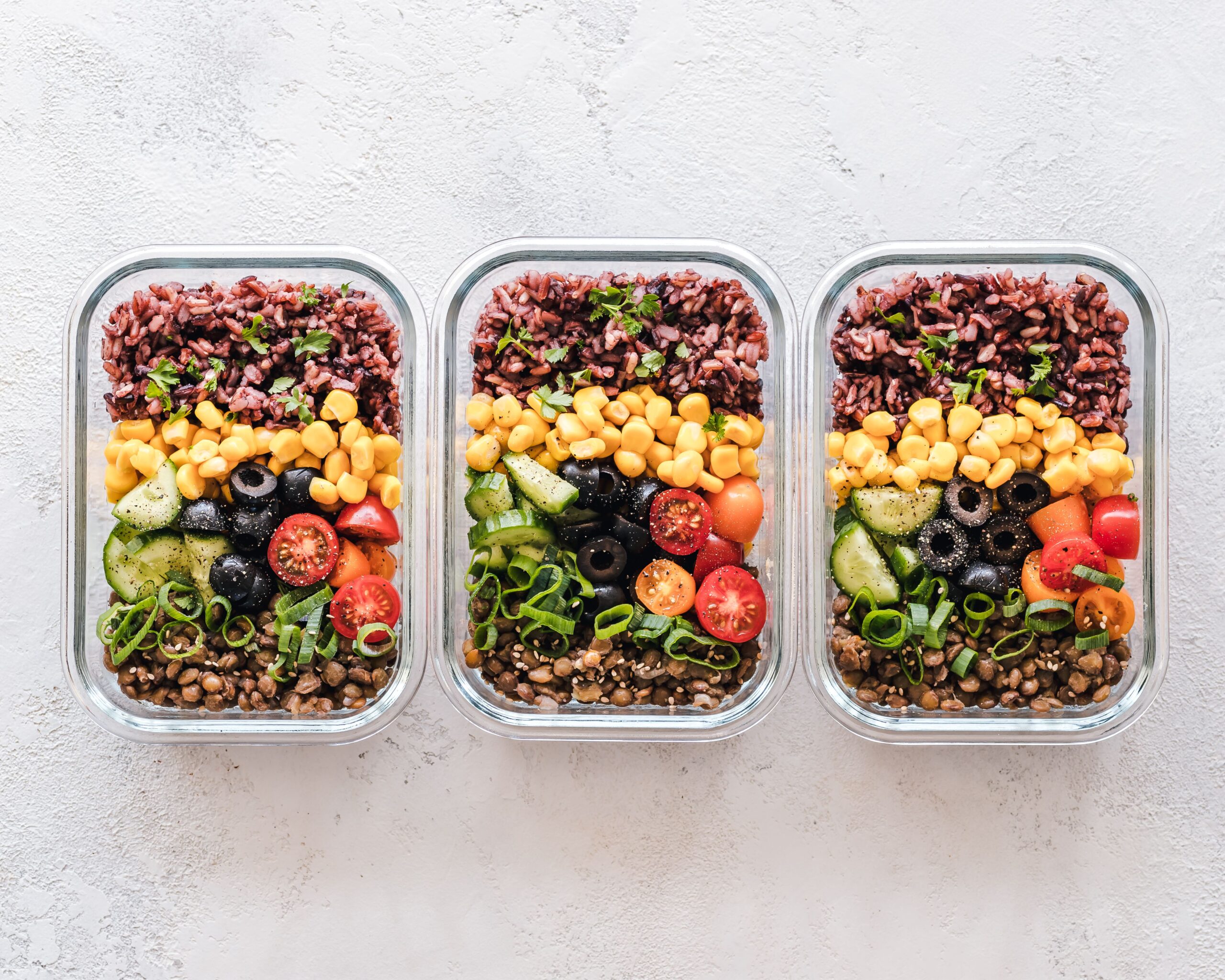
Meal prepping can save time, reduce weekday stress and make eating well considerably easier. But you don’t need to spend your entire Sunday cooking or eat the same lunch five days in a row.
Meal prepping has an image problem. Mention it and you might picture a kitchen counter covered in identical plastic containers, each holding a carefully measured portion of chicken, rice and broccoli.
That is one way to do it. It is not necessarily the best one.
For most people, meal prep works better when it is less about preparing seven complete meals and more about making weekday eating easier. Cook a few useful ingredients, prepare some lunches, stock the fridge intelligently and suddenly Wednesday evening doesn’t begin with the question: What on earth am I going to eat?
Done properly, meal prep can save time and money, reduce last-minute food decisions and make it easier to build balanced meals. Harvard’s Nutrition Source also recommends starting small rather than attempting to prepare an entire week’s food at once.
Here is how to make it work.
Start with the meals that cause you problems
Before buying a collection of matching containers, ask a more useful question: which meals do you actually need help with?
If breakfast is already easy, leave it alone. If you eat dinner with your family every evening, perhaps dinner doesn’t need prepping either.
For many working people, lunch is the obvious problem. Others arrive home hungry at 7pm and order takeaway because cooking feels impossible. Your meal-prep routine should solve the part of your week that regularly goes wrong.
You also don’t need to prepare seven days of food. Harvard’s meal-prep guidance suggests beginners start by preparing enough dinners for two or three days.
That is far less intimidating than sacrificing half of Sunday to become your own catering company.
How to meal prep without eating the same thing every day
The easiest mistake is thinking in terms of finished meals.
Instead, think in components.
Prepare one or two proteins, a grain or other carbohydrate, plenty of vegetables and one or two sauces or dressings. Those ingredients can then become several different meals.
Imagine you prepare roasted chicken, lentils, brown rice, a tray of peppers, courgettes and onions, some washed salad leaves and a lemon-herb dressing.
On Monday, the chicken, rice and vegetables become a warm bowl.
On Tuesday, the lentils and vegetables go into a salad with feta and dressing.
On Wednesday, chicken and vegetables can become a wrap.
The ingredients are similar, but the meals don’t feel identical.
This approach also makes it easier to use whatever is already in the fridge rather than buying ingredients for five completely unrelated recipes.
Build a meal that will actually keep you satisfied
Meal prep isn’t automatically healthy simply because you cooked it yourself.
A useful starting point is to build meals around vegetables or fruit, a source of protein and a quality carbohydrate. Harvard’s Healthy Eating Plate, for example, suggests roughly half the plate from vegetables and fruit, one quarter from whole grains and one quarter from healthy protein sources such as fish, poultry, beans and nuts.
You don’t need to reproduce those proportions perfectly in every container. Think of them as a framework rather than a mathematical formula.
For protein, that could mean chicken, eggs, fish, tofu, Greek yoghurt, beans or lentils. Carbohydrates might include brown rice, quinoa, wholegrain pasta, potatoes or good bread. Then add vegetables, fruit and sources of unsaturated fat such as olive oil, nuts or seeds.
Most importantly, prepare food you genuinely want to eat.
The nutritionally perfect quinoa bowl is useless if you know you will ignore it and buy a sandwich instead.
Choose foods that survive meal prep
Some foods are simply better prepared ahead than others.
Roasted vegetables, grains, soups, stews, curries, beans and many cooked proteins can work well. Sauces, dressings and marinades can also do much of the heavy lifting because they allow similar ingredients to taste completely different.
Other foods are better left until the last minute.
A salad dressed on Sunday may be rather miserable by Wednesday. Crispy foods lose their texture. Cut avocado browns. Some delicate vegetables deteriorate quickly.
The solution isn’t complicated: prep what benefits from preparation and leave the rest alone.
Keep salad dressing in a separate container. Chop delicate ingredients closer to when you need them. Add nuts and seeds immediately before eating if you want them crunchy. If you are making wraps, assembling them on the morning you eat them may produce a much better lunch than leaving them fully assembled for several days.
Meal prep should make food more convenient, not noticeably worse.
Cook several things at once
This is where meal prepping genuinely saves time.
Rather than cooking one complete recipe and then beginning another, organise the kitchen around cooking methods.
Put a tray of vegetables in the oven. While they roast, cook rice or quinoa on the hob. Prepare a protein at the same time. Mix a dressing while everything cooks and wash any salad leaves or fruit you will need later.
Harvard’s meal-prep guidance similarly recommends beginning with foods that take longest to cook and using their cooking time to prepare other ingredients.
You don’t need six pans bubbling simultaneously. Two or three components prepared together can give you the foundation for several meals.
And when you cook something that freezes well, consider making double.
Future you will be grateful.
A realistic Sunday meal prep
Suppose you want to make weekday lunches and take some pressure off dinner.
Your shopping list might include chicken or tofu, chickpeas, brown rice, peppers, courgettes, broccoli, spinach, tomatoes, lemons, Greek yoghurt, fresh herbs, fruit and a few cupboard staples.
Then prepare:
A tray of roasted vegetables
Use them in grain bowls, salads, wraps or alongside dinner.
One versatile protein
Roast chicken, bake tofu or cook a batch of beans or lentils.
A grain
Rice, quinoa, bulgur or another grain you enjoy.
One good sauce
A yoghurt-herb sauce, tahini dressing, pesto or simple vinaigrette can transform fairly basic ingredients.
A few grab-and-go foods
Wash fruit, portion yoghurt or prepare whatever makes breakfast and snacks easier.
You now have building blocks rather than five identical lunches.
If you want even more variety, freeze some portions and cook one fresh meal during the middle of the week.
Don’t assume everything lasts five days
This is one of the most important parts of meal prepping.
Preparing food on Sunday does not automatically mean it should sit in the refrigerator until Friday.
Food-safety guidance varies somewhat by food and jurisdiction. As a conservative general rule, the USDA advises eating most cooked leftovers within three to four days when properly refrigerated, or freezing them for longer storage.
That means if you prepare food on Sunday for the entire working week, freezing later-week portions is often a better strategy than simply leaving everything in the fridge.
Cool cooked food promptly and refrigerate it rather than leaving it sitting on the kitchen counter for hours. Using smaller, shallow containers helps food cool more quickly.
Label containers with the date as well. It takes seconds and eliminates the Thursday-evening game of trying to remember when something was cooked.
And don’t rely entirely on smell or appearance to determine whether food is safe. Bacteria capable of causing foodborne illness do not necessarily announce themselves with an unpleasant smell.
Use your freezer properly
The freezer may be the most underrated part of meal prep.
Curries, soups, stews, cooked beans and many sauces freeze particularly well. Making four portions doesn’t mean eating the same meal four times this week. Eat one, refrigerate one and freeze two.
Over time, this creates your own collection of convenient meals.
Then a busy Thursday doesn’t require cooking from scratch or ordering takeaway. There may already be something good waiting in the freezer.
Just remember that not everything freezes beautifully. Foods with high water content, including many salad vegetables, can become unpleasantly soft after thawing.
Freezing is therefore less about putting everything into suspended animation and more about learning which of your regular meals handle it well.
Don’t meal prep more food than you actually eat
There is something satisfying about a refrigerator full of neatly organised containers.
Until Thursday arrives and half of them are still there.
Meal prepping only saves money if you actually eat the food. Preparing too much simply moves food waste from the supermarket to your fridge.
For the first few weeks, pay attention to what disappears and what doesn’t.
Perhaps you need five lunches but only two prepared dinners. Perhaps you regularly eat out on Friday. Perhaps you don’t actually want a cooked breakfast during the week despite repeatedly preparing one.
Adjust accordingly.
The best meal-prep routine isn’t the most impressive one. It is the one that matches your real life.
Make Wednesday part of the plan
There is also no rule saying everything has to happen on Sunday.
In fact, a small midweek reset can make meal prep much easier.
Prepare two or three days of food at the weekend, then spend 20 or 30 minutes on Wednesday replenishing fresh ingredients, cooking another protein or moving a frozen meal into the refrigerator to thaw safely.
This keeps food fresher and introduces more variety without requiring another major cooking session.
For some people, Sunday plus Wednesday will work much better than attempting to predict every meal seven days in advance.
Meal prep should make life easier
The internet can make meal prepping look like a hobby in itself: dozens of containers, colour-coded labels, precisely weighed ingredients and an entire refrigerator arranged for the camera.
It doesn’t need to look like that.
You can meal prep by making twice as much dinner and taking the leftovers to work. You can roast vegetables while cooking Sunday lunch. You can make a pot of soup and freeze half of it. You can simply decide what you are eating for three evenings and buy the ingredients in advance.
The point isn’t to become exceptionally organised.
It is to remove some of the friction from eating well when you are busy.
Start with the meals that usually cause problems. Prepare a few versatile ingredients. Freeze what you won’t eat within a few days. Keep some freshness and flexibility in the week.
If meal prepping gives you good food when you need it—and makes Wednesday evening slightly easier—it is already doing its job.
Further Reading
Stay Connected
Subscribe to the Together Magazine newsletter for thoughtful features, personal development insights, cultural recommendations, museum exhibitions, events in Brussels and Belgium, and the latest stories delivered directly to your inbox.