



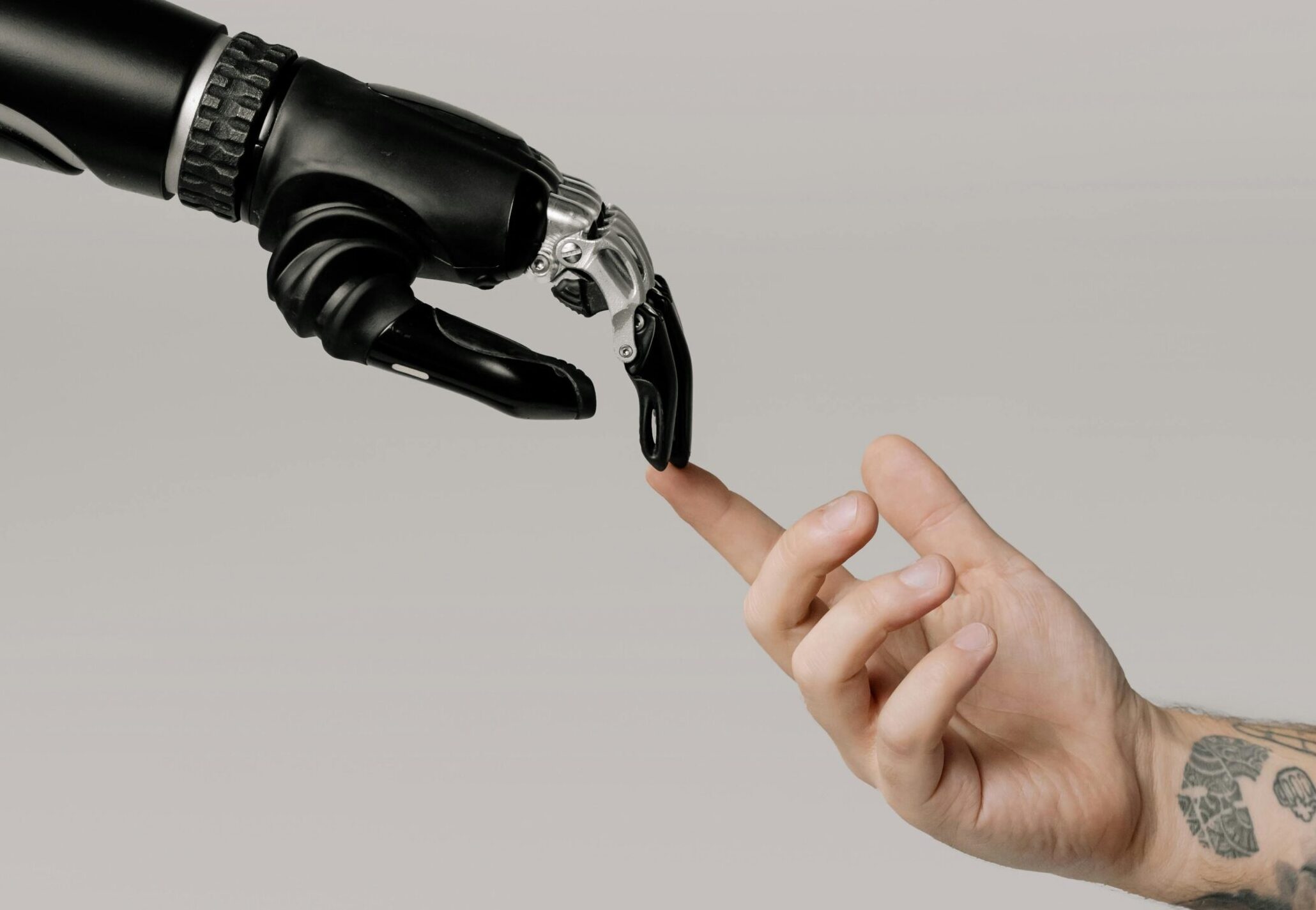
A few years ago, asking a computer to explain a complex concept or help plan your week sounded like science fiction. Today, it has become part of everyday life.
Artificial intelligence is now woven into how many people work, study and make decisions. Students use it to understand difficult topics. Professionals use it to draft reports and generate ideas. Entrepreneurs use it to analyse data, brainstorm strategies and automate repetitive tasks. What once required hours of effort can often be completed in minutes.
The speed and convenience are remarkable. Yet alongside the excitement, a more complicated question has emerged. As AI takes on more intellectual tasks, are we becoming smarter through our access to these tools, or are we gradually outsourcing the very thinking skills that help us grow?
The answer is not as straightforward as either side of the debate would like to believe.
Every Generation Fears New Technology
Concerns about technology weakening human abilities are not new. When calculators became widely available, critics worried that people would lose basic mathematical skills. When search engines arrived, some feared that memory and research skills would deteriorate. Even the written word itself was once criticised for reducing the need to remember information.
In many cases, those fears were partly justified. Certain skills became less essential because technology could perform them more efficiently. At the same time, new opportunities emerged. Calculators allowed people to focus on more advanced mathematics. Search engines made vast amounts of information accessible within seconds.
Artificial intelligence appears to be creating a similar shift, although on a much larger scale. Unlike previous tools, AI is not simply storing information or performing calculations. It can analyse, summarise, explain and create. That makes it both incredibly useful and potentially transformative.
The real challenge is determining how we choose to use it.
AI Can Make Us Smarter
Used thoughtfully, AI has the potential to become one of the most powerful learning tools ever created.
For centuries, access to personalised education was largely reserved for a privileged few. Today, anyone with an internet connection can ask an AI system to explain a scientific theory, summarise a book, provide feedback on an essay or act as a language tutor. Knowledge that once required extensive searching is now available almost instantly.
This accessibility has significant advantages. People can learn faster, explore unfamiliar subjects and gain insights that might otherwise remain out of reach. AI can also help bridge gaps in understanding by adapting explanations to different levels of expertise.
For professionals, the benefits can be equally significant. Instead of spending hours gathering information, they can focus more time on analysis, strategy and decision-making. In theory, this allows human intelligence to be directed towards higher-value thinking rather than routine tasks.
History suggests that the most transformative technologies are often those that free people from repetitive work so they can concentrate on more creative and complex challenges. AI may ultimately prove to be one of those technologies.
The Risk of Intellectual Convenience
However, there is another side to the story.
Human abilities develop through use. Critical thinking, problem-solving and creativity are not fixed traits. They are skills that strengthen when exercised and weaken when neglected.
If AI becomes the default solution to every challenge, there is a risk that people begin engaging less deeply with information. Why struggle through a difficult problem if a chatbot can provide an answer in seconds? Why spend time drafting an argument if software can generate one instantly?
The concern is not that AI provides assistance. The concern is that convenience can gradually replace effort.
Learning often occurs during the process of thinking, questioning and making mistakes. When those stages are removed entirely, the opportunity for growth may disappear as well. A student who uses AI to understand a concept is likely to benefit. A student who uses AI to avoid understanding the concept may not.
The distinction is subtle but important.
Thinking Versus Knowing
One of the most interesting aspects of the AI revolution is that it forces us to reconsider what intelligence actually means.
For much of modern history, intelligence was closely associated with possessing knowledge. The person who knew the most facts often held an advantage. Today, information is available almost instantly. Knowing something is no longer as valuable as knowing what to do with it.
As a result, skills such as judgement, critical thinking and creativity may become increasingly important. AI can generate information, but it cannot fully replace human wisdom. It can offer suggestions, but it cannot determine which values should guide a decision.
In this sense, the future may place less emphasis on memorisation and more emphasis on interpretation. The people who thrive will not necessarily be those who know the most. They will be those who ask the best questions, evaluate information carefully and apply it effectively.
The Future Belongs to Active Users
Perhaps the most significant factor is not the technology itself but the mindset of the person using it.
Some people use AI as a shortcut. Others use it as a tool for deeper exploration.
Consider the difference between someone who asks AI to write an entire presentation and someone who uses AI to challenge their assumptions, generate alternative viewpoints and improve their own ideas. Both are using the same technology, yet the outcomes are entirely different.
One approach reduces engagement. The other enhances it.
The same pattern has appeared throughout history. New technologies tend to amplify existing habits rather than completely replace them. Curious people often become more curious because they can explore ideas more easily. Passive users may become more passive because convenience removes the need for effort.
AI appears to be following the same trajectory.
A New Digital Responsibility
As artificial intelligence becomes more integrated into daily life, a new form of digital literacy is emerging.
The challenge is no longer simply finding information. The challenge is knowing when to rely on technology and when to rely on your own judgement.
This requires intentionality. It means resisting the temptation to outsource every decision, every creative task and every intellectual challenge. It means recognising that some forms of effort are valuable precisely because they force us to think.
The goal should not be to compete with AI. In many areas, that would be impossible. Instead, the goal is to develop the uniquely human qualities that technology cannot easily replicate: curiosity, empathy, wisdom, creativity and ethical judgement.
These qualities have always mattered. In an AI-driven world, they may matter more than ever.
So, Is AI Making Us Smarter or Lazier?
The truth is that artificial intelligence is capable of doing both.
For some people, it will become a powerful tool for learning, creativity and growth. It will help them acquire knowledge faster, explore new ideas and solve problems more effectively than ever before.
For others, it may become a substitute for thinking. An endless source of answers that gradually reduces the incentive to engage deeply with the world.
The difference lies not in the technology but in how it is used.
Every major innovation changes human behaviour in some way. Artificial intelligence is no exception. The question is whether we allow it to replace our thinking or use it to expand our capabilities.
The most likely future is not one in which AI makes everyone smarter or everyone lazier. It is one in which the people who continue to think critically, question assumptions and remain intellectually curious gain an even greater advantage.
In that sense, AI may not be changing intelligence itself. It may simply be revealing how we choose to use it.
Key Takeaways
- AI can be a powerful tool for learning, creativity and productivity.
- Intellectual skills develop through practice and effort.
- Convenience becomes a problem when it replaces critical thinking.
- Human qualities such as judgement, curiosity and creativity remain essential.
- Whether AI makes us smarter or lazier depends largely on how we use it.
Further Reading
Find the most interesting article for you here
Stay Connected
Subscribe to the Together Magazine newsletter for thoughtful features on personal development, culture, technology and modern life. You’ll also receive recommendations for museums, exhibitions, events and experiences across Brussels and Belgium, along with our latest articles delivered directly to your inbox.