



He is the man who elevated what was a remote fishing nation into a world-renowned luxury destination.
Mohamed Umar ‘MU’ Maniku is widely credited with being the “founder” of the start of tourism on the islands.
He was chairman of Universal Enterprises for over five decades and his company grew to operate several properties scattered around the sprawling archipelago.
Next month (August) marks the first year of his death, at the age of 78, but his amazing legacy lives on with the company’s recently rebranded resort portfolio proving more popular than ever.
October 3 is a big day in the calendar in the Maldives – National Tourism Day – and it was on 3 October 1972 that Kurumba, near Male, that the country’s first resort and the first launched by Maniku, opened.
A Brief History
Life in the Maldives actually dates some 4,000 years ago.Back in the early 1970s, the Maldives looked rather different to what it does today.
When Mohamed Umar Maniku and three friends opened Kurumba, the country’s first tourist resort, in 1972, there wasn’t even a landing dock – visitors had to wade in waist high water to get from the boat to the beach.
The first visitors were mostly intrepid travellers, journalists and photographers from Italy
The Maldives Independent says a “watershed moment” came in 1987 when Maniku spearheaded Kurumba’s transformation into a world-class luxury hotel.
Expansion of the country’s airport, located at the capital, Male, has propelled the Maldives to the enviable position it now enjoys.
Resort islands
There are well over 100 resort options to choose from but if you’re looking for a couple that tick pretty much all the boxes look no further than a couple: Niva Kuramathi and Niva Dhigali, both in the rebranded Universal Resort “family.”
Kuramathi, located roughly in the middle of the Maldives,is the country’s second oldest resort island.
The understandable excitement of any visit to this destination starts even before you set foot on the island.
That comes in the shape of a speed boat that whisks you from just outside Male airport to your chosen destination.
After about 50 minutes, the dream island of Kuramathi, about 45 km away, emerges in the distance.
Previously uninhabited, its residents were relocated to Rasdhoo, an island nearby, to facilitate its development.
With its white sandy beaches, crystal clear waters and towering old trees, the island makes it a perfect holiday destination.
Famously known for its wedding photography, every euro spent on this mesmerizing islands is worth it.
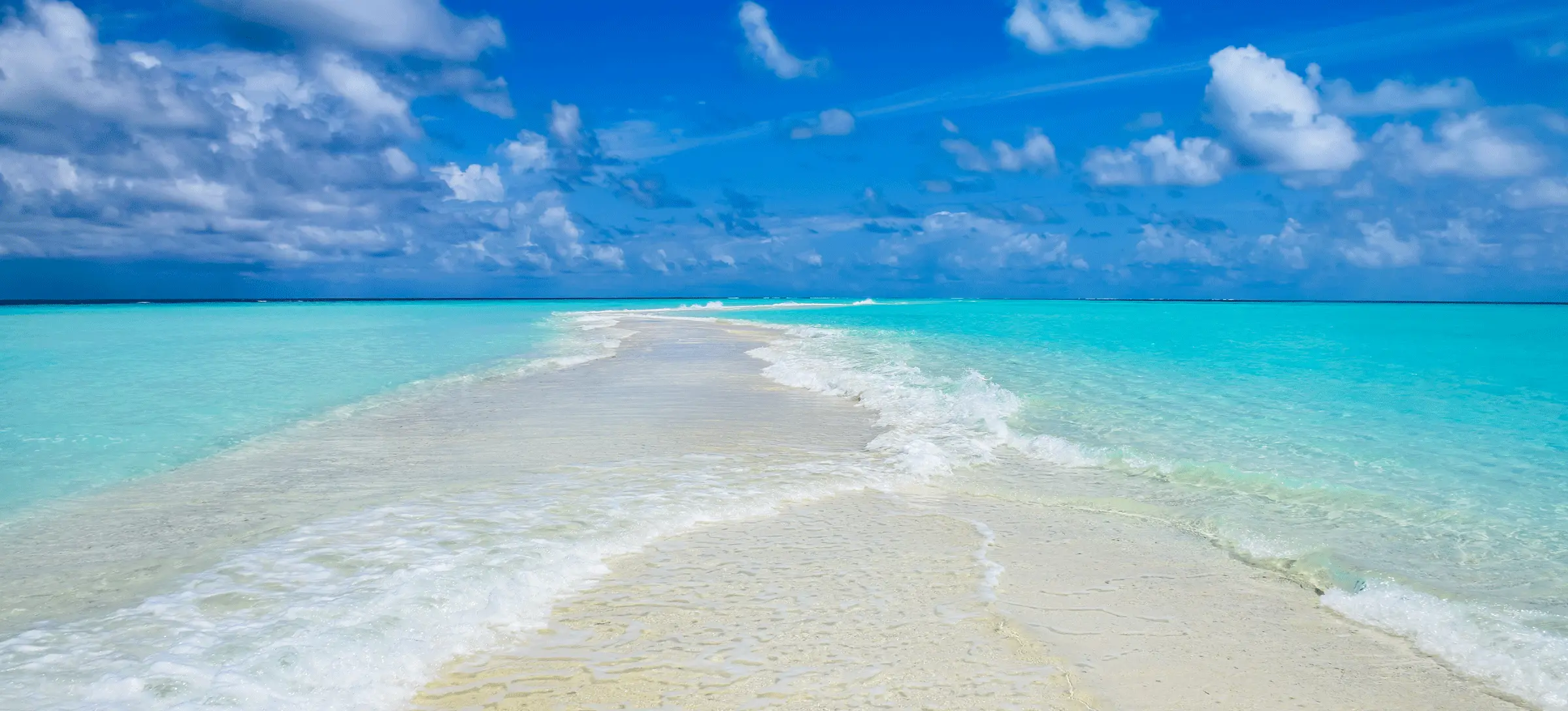
Its USP is the Sandbank, a long stretch of sand, where the panoramic views at sunset are quite mesmerising. Little wonder this was voted among the world’s best beaches in 2025.
The resort is constantly evolving and some of its oldest villas, currently being demolished, will soon be replaced by brand new accommodation.
Its “sister” resort island of Dhigali, meanwhile, is located further north and is another perfect island getaway.
From Kuramathi you reach it by speed boat back to Male, then another highlight of any trip to the Maldives… a thrilling 45 minute journey by one of the many seaplanes that criss cross this country.
Dhigali boasts vibrant greenery so look out for anything from an elegant grey heron to an indigenous “flying foxes” gliding gracefully through the treetops.
Located in Raa Atoll, it too is surrounded by the pristine waters of the Indian Ocean and really is a slice of paradise.
Why go
The Maldives basks in some 3,000 sunshine hours each year, that is about twice as many as Belgium or the UK. Daytime temperatures bounce between 28C and 32C every single month.
It really is the perfect vacation for a honeymoon, family vacation, special occasion.. or just to cross it off your bucket list.
Where To Stay
At both resorts you will be spoilt for choice when it comes to deciding the type of accommodation for your dream holiday.
Kuramathi, one of the largest resorts in the Maldives and one of the first established, boasts several types of villas,including 35, two-bedroom beach houses, perfect for families or friends travelling together. They offer two-storey living spaces, king-size beds, wooden sundecks and spacious bathrooms and outdoor rain showers.
They come with lagoon or coral reef views and can accommodate up to 6 adults.
There’s also an assortment of accommodation at Dhigali, including beach villas with a pool which can sleep up to 4, a spacious covered outdoor veranda – particularly welcome in the blistering heat – and which also enjoy stunning views of the turquoise sea.
Nothing is left to chance and there is even a resident doctor on hand in case of medical attention.
Dining
Of course, eating out is always a very important part of any holiday and visitors to either resort will not be disappointed by the amazing array of culinary delights that await them. Both are well known for their authentic local cuisines.
They say the Maldives is a destination like no other and that extends to some of the dining options on offer here which really do straddle world cuisine.
As well as a particularly impressive buffet, Kuramathi, for instance, boasts no less than a dozen restaurants, nine of which are a la carte, across the 1.8km long island. All are quite different to each other.
Local fishers brin Maldivian lobsters and fresh tuna to the resort, ensuring the freshest catch.
There are three types of meal plans for guests, full board, all inclusive and dine around all inclusive, and which you go for depends on your personal preference and budget.
But you might like to try “Reef”, the island’s excellent seafood resto located on a jetty and which, typically, features lovely dishes like Norwegian salmon and scallops from Australia.
There’s also “Kobe”, Kuramathi’s Japanese equally delightful resto where the chefs do live cooking in front of diners.
Being smaller island, Dhigali has fewer a la carte restos (three), but if you opt for its good value premium all-inclusive package, as many do visiting this resort, you can eat where you like so the only challenge is deciding where to go.
“Capers” is the place for what can be a very substantial breakfast plus a lunch and dinner buffet featuring local and international dishes.
Tucked away in what is called “the Jungle”, an area of rich vegetation that was here long before it became a resort island, is “Battuta”, a culinary journey inspired by Ibn Battuta, described as the Muslim world’s equivalent of Marco Polo.
What To Do
There is far more to this archipelago than just mere relaxation.
Yes, these 1,200 islands, spread over 26 coral atolls, is world renowned for its flawless white sands and shimmering waters. It really is a far flung slice of paradise and just a bit of time spend at either Kuramathi and/or Dhigali, it is easy to see why it is one of the world’s most coveted vacation destinations.
But there’s also plenty to keep even the most restless of travellers busy, including trying your hand at watersports such as kayaking and stand up paddle boarding, both available at Kuramathi and Dhigali.
Those keen to explore the amazing underwater world by like to try a spot of diving. If so, you are likely to be greeted by dazzling coral gardens playing host to an enormous variety of fish along with turtles, rays and sharks. These can be found just a few metres from your accommodation and do not be afraid if you encounter a (small) shark as they are completely harmless. The advice is that if you don’t touch them they won’t touch you.
The two resorts also offer boat trips further out in the ocean where, if you are lucky, you might catch a glimpse of dolphins. But no attempt it made, and rightly so, to coerce these beautiful creatures to “perform” merely for the benefit of tourists. Even if scuba diving is not your thing, you can admire the marine life on a glass-bottom kayak/canoe.
On Kuramathi you can also enjoy a movie under the stars and indulge yourself with a spot of lime wellbeing. You should also pop into the excellent eco centre that has a skeleton of a sperm whale plus info on what the island is doing to save water and cut its carbon footprint. It also has its own “hydroponics” garden where the island grows much of the salad greens and herbs you find at the breakfast buffet.
If you happen to visit this summer and you are a football fan you may catch a glimpse of former England star Stuart Pearce who is among those running a soccer camp for youngsters on Kuramathi.
Back on Dhigali, meanwhile, most folk head to Haali Bar around sunset to take in the exceptional views, accompanied by a DJ and/or a Cuban-born saxophonist.
There are a couple of very pleasant walks on both islands that also provide a bit of respite from the heat and humidity. On Kuramathi it is the Botanic Walk, described as akin to watching an Avatar movie, which features a remarkable 360-year-old Banyan tree plus banana and coconut trees.
Just as lovely is “the Jungle” on Dhigali which is a constant reminder of how the island once looked (despite an impressive development of the island over the years some 80 per cent of this central area and its lush vegetation has been preserved).
On both islands getting around could not be easier as a fleet of buggies/trolleys are constantly on the go to ferry tourists around. All you do is flag one of these “taxis” down and tell the always-pleasant driver where you want to go.
Sustainability and climate
As the world’s lowest lying country the Maldives is under serious threat from climate change. In 2024 an intense ocean heatwave caused mass coral bleaching in the Maldives. Reef is growing but not fast enough to keep pace with rising sea levels.
Ten years earlier, in 2004, all Maldivian islands except for 9 were hit by the 2004 Indian Ocean tsunami.
Two-thirds of the capital city Male was flooded during the first hours of the day. Other outlying low-level atolls were badly affected.
It is partly for this reason that Kuramathi and Dhigali have implemented policies, also common on other islands, designed to make their operations as environmentally- friendly as possible.
It is why LED lights, the most energy-efficient lighting technology available, are widely used and why there’s a strict policy on use of plastics.
Even many of the trees are numbered so as to comply with auditing purposes.
Commendably, both these deluxe resorts have sustainability initiatives.
Michel Muffat, Executive Chef at Kuramathi, says, “Climate change is an increasingly critical factor for businesses, particularly in the tourism and fisheries sectors. With over 90% of resort infrastructure located near the coastline, operations must constantly adapt to rising sea levels, beach erosion, and warmer ocean temperatures that affect marine life and coral.”
When To Go
The Maldives, a devout Muslim country, is now a hugely popular tourist destination and there is no “wrong” time to go.
But it is good to know also that the climate is tropical,with a warm ambient and sea temperature that varies year-round.
If you want to enjoy Kuramathi at its best then maybe the best time to go is during the dry season, from December to April.But be aware that during this period the island gets a lot of tourists and prices are at their steepest.
The weather on Dhigali can be unpredictable: one minute it is raining, the next the sun is out.
Generally, November to April is the best time to visit as it is the dry season. You are pretty much guaranteed the dreamy Maldives weather you have always drempt of during this time. If you are looking to save some $s consider going in the shoulder season (just before the start and after the end of high season), so sometime in late October or early May.
How to get there
From Belgium, there are no direct flights but there are excellent connections with Emirates to and from Dubai to Velana international airport.
The journey does not end once you have reached the capital city of Male, either: some of the nearer islands like Kuramathi are accessible by speedboat (it is just 50 minutes away from the airport) but most are a seaplane-flight away. For those unfamiliar with them, these are small aircraft that land on water.
Summary
A holiday on one of the two luxurious resort islands featured here offers much more than your average beach vacation.
Over five centuries since Mohamed Unmar Maniku took his first, tentative steps towards putting his home firmly on the tourist map, the Maldives is, without doubt, still most people’s dream destination. Right up there on your buck list vacay.
As magnificent as the facilities are at both Niva Kuramathi and Niva Dhigali, it is, arguably, something else that remains the most abiding takeaway and that is the sheer humility, modesty and friendliness of the staff working there.
By local law, some 80per cent of employees on resort islands in the Maldives should be Maldivian people and that is, for this writer, just fine because no matter where you may wander, you really could not wish to meet nicer people.