




Price hikes, reforms, protests, market consolidation—Belgium’s “titres-services” (subsidized domestic service voucher) system has never been the subject of such intense debate.
In Brussels, nine domestic workers have now decided how to respond: they are launching “Les Perles rouges” (The Red Pearls), an agency they co-own.
It offers the same services as a traditional agency, but with the workers themselves in charge.
To get operations underway by January 2027, the cooperative is launching a public fundraising campaign on October 15.
A single share costs €50, and the goal is to raise €90,000 by March 2027.
Thousands of families, elderly individuals, and busy working people rely on domestic help every single day.
It is an essential profession—though rarely recognized as such—that has recently taken center stage in public discourse.
In Flanders, the cost of the “service voucher” (a subsidized payment system for domestic work) is set to rise from €10 to €12. In Wallonia, a reform is in the works for 2027, a development that prompted nearly 80 workers to protest in Namur on October 7.
In Brussels, the voucher has cost €11.40 euros since January; while this price increase funded a gross wage boost of €0.77 per hour, it also opened the door to uncapped administrative fees. According to the trade union covering such work, in a system heavily subsidized by the regional government, the working conditions of those who actually perform the labour “remain a secondary concern” in these discussions.
On the ground, however, the reality is clear: according to a survey by the CSC (a major Belgian trade union), six out of ten domestic workers in Brussels feel their workload has become heavier since the price hikes, and nearly seven out of ten suffer from back pain.
It is a physically grueling profession, carried out in Brussels by nearly 27,000 people—almost all of whom are women.
Nine of these workers decided they could no longer wait for things to change; they took matters into their own hands and created their own organization—an agency that “reflects who they are and, most importantly, one that belongs to them,” says their union.
Because that is where it all comes down to.
What if a “service voucher” agency—a company providing domestic help—were owned by the very people who do the work?
That is the premise behind “Les Perles Rouges” (The Red Pearls), and it is built on a few simple principles.
For the client, nothing changes: the same service and the same vouchers remain available across all 19 municipalities of the Brussels Region.
For those who perform the work, however, everything changes.
Each founder is a co-owner, and the cooperative is open to all domestic workers—both women and men.
In general meetings, every member has one vote, whether they are a worker or a supporter; meanwhile, the statutes ensure that key decisions—such as the fundamental purpose of the cooperative—require the consent of the founders.
They also decide how the company’s earnings are used.
Two commitments have already been established: providing training for workers—covering practical matters like how to read a pay slip—and creating career development opportunities, which is a rarity in this sector.
The project is guided by five core values: dignity, honesty, a sense of family, quality, and growth.
These principles do not exempt the cooperative from standard regulations: each hour worked is paid for partly by the client (via the service voucher) and largely by the Brussels Region, which provides a subsidy to the company for every redeemed voucher.
The agency will launch in January with ten full-time positions, supported by a solidarity loan from Crédal and the €25,000 guarantee required for official accreditation—a sum that has already been deposited.
The real difference lies in how the margins are allocated—directed toward wages, training, and working conditions—and in the way the service is delivered: with a “human-centered approach and a little extra heart.”
The founders did not build this model on their own.
For several months, they have been supported by Fabruka, an organization that helps groups of citizens transform a social need into a social economy enterprise.
Michel Van den Borne, coordinator of the Fabruka project, said, “We support other projects led by workers, but this one is particularly unique: it involves domestic workers who are creating their own agency and becoming its co-owner”.
Established in June 2026, the cooperative will have its application for official recognition reviewed on October 20, with a launch planned for January 2027.
Beyond the legal structure, there are, first and foremost, nine founders—and a personal story the likes of which this sector rarely sees.
In the “service voucher” sector—a system in Belgium where subsidized vouchers are used to pay for domestic help—it is rare for a company to be founded by a domestic worker herself.
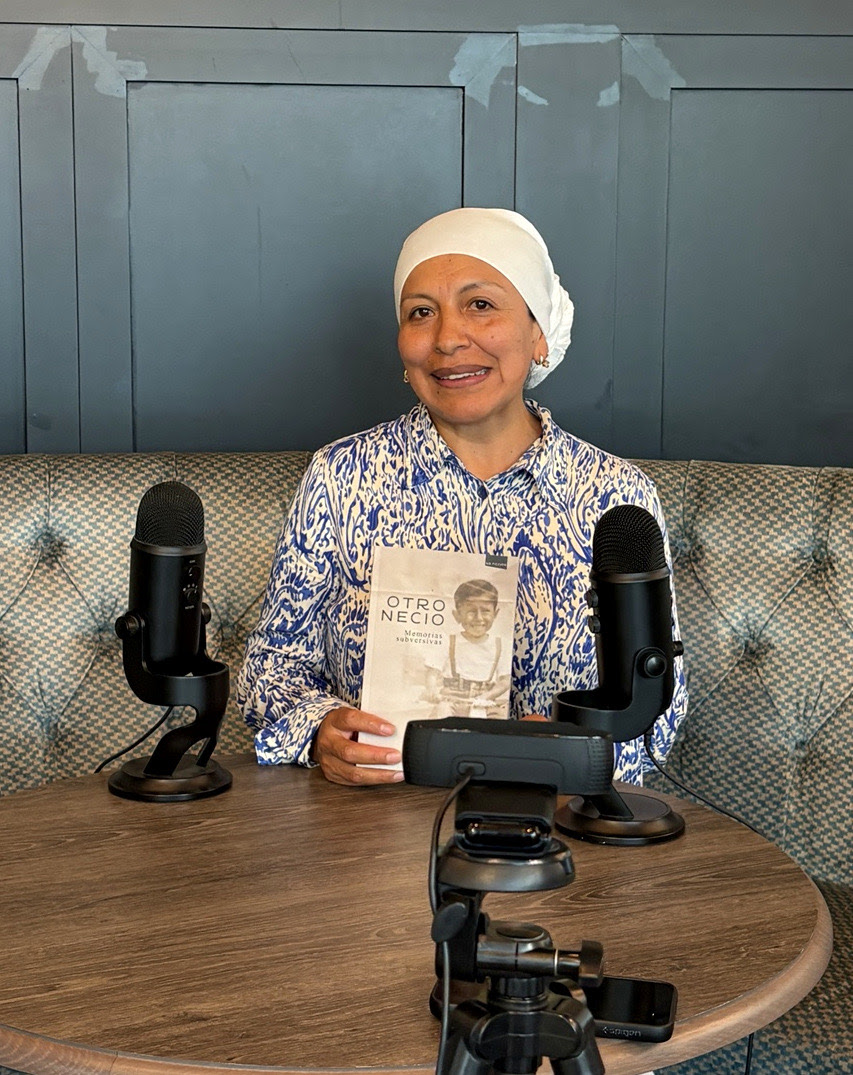
Yet, that is exactly what happened with Maira Caiza.
With 26 of experience and hundreds of homes cleaned, she often heard a particular phrase from her clients—a phrase that eventually gave the cooperative its name: “You’re a real gem. And a “red” gem—that’s truly rare.”
Maira loves her profession and makes no secret of it, telling this website, “I arrive at the homes of families who simply don’t have the time, and I’m able to help them.
“My clients listen to me; they trust me. But in some companies, you’re treated as a mere tool, not a human being. There’s no dialogue—sometimes not even a ‘hello’.”
The turning point for her came during the Covid-19 pandemic when she hit an obstacle that would have discouraged many others.
She goes on, “I wanted to start my own company, but I was told I needed to put down €25,000 or official accreditation. I thought it was all over.
“But then I took a course on starting a business and realized there was another way.”
That “other way” meant working together – with others.
A colleague shared her perspective, and soon the project caught the interest of a client, Isabelle Steenebruggen—a veteran of 18 years in the social economy and a co-founder of the fair-trade cooperative “La Pachamama”.
Convinced by the idea, Isabelle opened a door for them by putting them in touch with “Fabruka”, and she herself became a member of the cooperative.
Through a series of encounters, the group grew to include nine founders, all of whom subscribe to a shared set of “house rules,” which Maira sums up as follows: “For us, everything begins with well-being: listening, showing respect, and taking care of one another.”
She adds, “We want training on how to work effectively without falling ill.”
She adds an important clarification: “We are a cooperative open to all workers. Our cause is the workers’ cause: defending their rights, improving their working conditions, and building a future together that is fairer and more inclusive.”
Nine founders, one name, an agency of their own—now they just need the resources to open its doors.
- Photo credit: Maira Caiza.