








By Danuta Hubner, a former EU Commissioner
After the departure of the UK, the global geostrategic landscape has undergone a profound change moving toward a polarised world, full of turbulences and unpredictability, with the global order abandoning its foundational rules.
It is hard to imagine that today any political force in the UK would even consider holding a referendum on the UK’s exit from a community like the EU, a referendum about whether to leave but not about where to go.
Brexit was perhaps the first known instance when a country has voluntarily left a decision making centre and a development mechanism of a preferential treatment based community of states.The UK was leaving the EU after 45 years of membership and countless contributions to the EU evolution nearly in every area.
Commissioner Arthur Cockfield played crucial role in building the single market, UK was supportive to eastern enlargement, engaged in competition policy, international trade, influencing the administrative system and culture of bureaucracy.Unfortunately the Britons were also champions in derogations, opt-outs and vetoes. The referendum lacked the voices of young people, those who voted – voted yes, but their participations was low.
The two negotiated agreements, on the Withdrawal and on the Trade and Cooperation had different legal basis and different procedures, but in neither of them the financial sector and foreign and security policies were included. The EU proved to be exceptionally united during the negotiations, and there was no domino effect after Brexit.
When the criminal war of Russia started, the UK got immediately engaged in support for Ukraine.Lack of EU-UK agreement on foreign and security policy, rejected by the UK Prime Minister at the time, became a missing element in the EU-UK relations.
In 2026, the two parties did not find a deal on the UK participation in the SAFE programme. My understanding is that the UK government is warming to the idea of reviving the defence cooperation with the EU.The level of ambition for cooperation is going up, UK is strongly present in the coalitions of the willing. The EU and UK are, definitely fit for working together on reviving the rules based international order, as we share values and pursue similar opportunities.
It would be good to see a truly solid effort of resetting the relations as, after the first reset summit of 19th May, 2025, there is now a new chance coming with the Brussels Summit of 20 November, hopefully regarding building defence capabilities, reinforcing foreign policy, and updating cooperation in view of deep global shifts.
The first reset of relations offered by MOU signed in May 2025 has opened the mutual understanding covering trade issues, energy, climate, migration and people-to-people contacts, and the path toward joint defence efforts.
It is, however, surprising how difficult it is to overcome the Brexit logic of red lines and cherry picking. Failure on SAFE deal is a bad example. I trust that November summit will appreciate what is pragmatically happening so far but will focus on next steps.
The agenda seems bold, certainly about deepening security cooperation, but also aiming at boosting the youth mobility, which seems to be politically sensitive on participation limits, visas and tuition fees, reducing checks and barriers on sanitary and phytosanitary issues, linking the ETS of both parties, with implications for carbon pricing and the CBAM, the EU’s carbon border regime, energy cooperation and linking electricity markets. Erasmus Plus enters into effect as of the January 2027.
The expectation on the British side is finding the way to cope with the review of the TCA. But for the EU the review is not a mandate to reopen negotiations on the Brexit settlement. The good news is that we have political dialogue and a credible agenda but also that defence and security deal works.
The mood to enter a more pragmatic phase in our relations seems to be there.
The 20 November meeting is a test.
It must not remain a new declaration of intent. It is key to maintain the awareness that the world around is dangerous and demanding.
The formal review of the TCA is closely connected to security and defence.
For the EU, the strategic objective is to work toward relations more stable, predictable and useful for Europe’s security and economic interest.
EU might not be, however, interested in opening fundamental questions related to UK’s departure from the single market, customs union and the single market. It is important to stabilise political reset and cherish the movement beyond the confrontational period.
It is important to ensure that political commitments become binding and converted into pragmatism of cooperation.
So much can be achieved without reopening the whole Brexit book. The Summit, hopefully, will not be only a purely technical stock taking. It should be used to better the mutual relations and thus becoming a moment of political reset that will become a vehicle for change.
This is in the interest of both sides.
Of course, political declarations have limits, that is why legal instruments will be needed, workable schemes, clear binding time tables, respect of rules and financial conditions, monitoring of commitments. Indeed, both sides should benefit from pragmatism.
The EU needs UK as a partner.
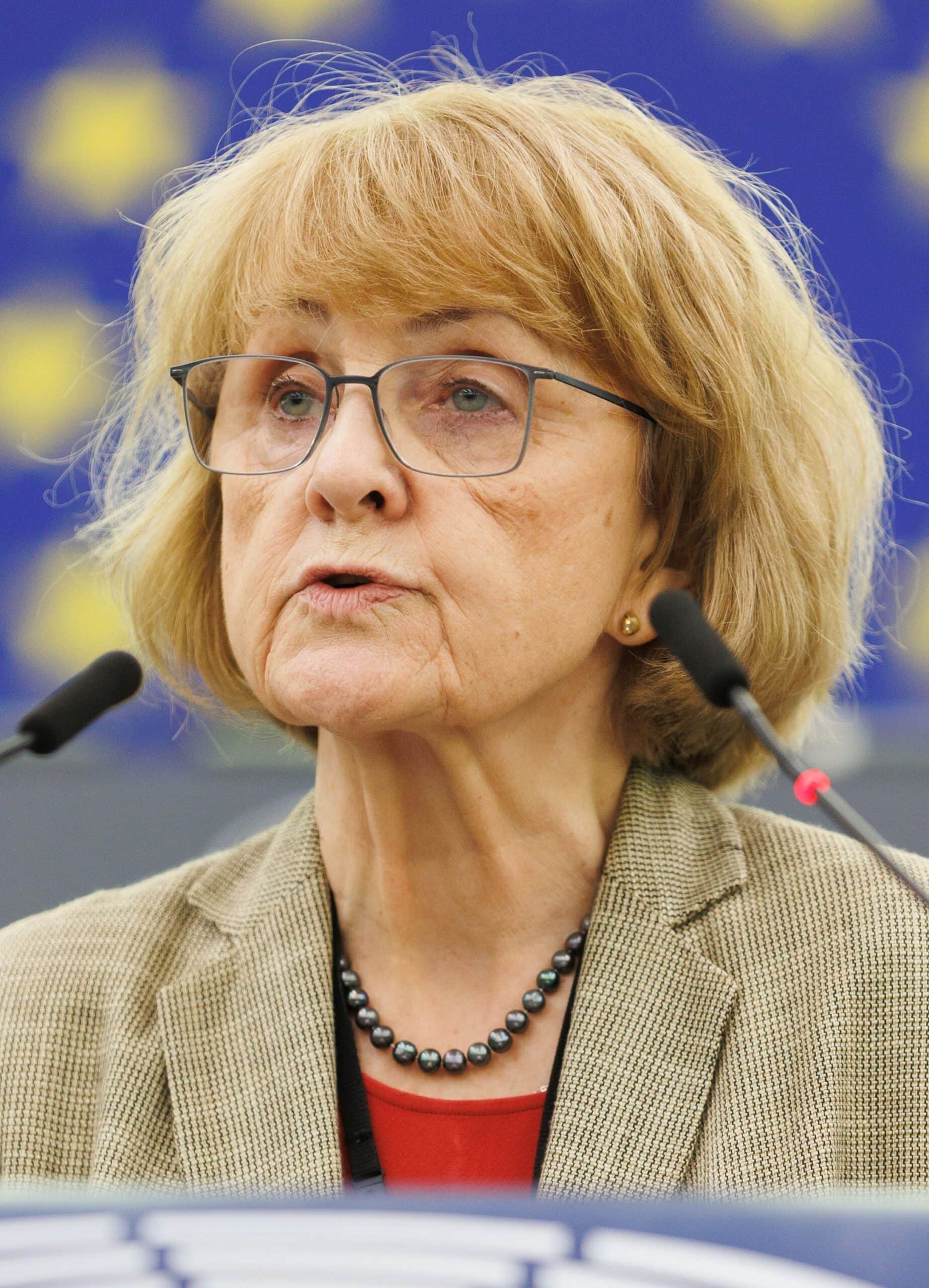
- Danuta Hubner is a Polish politician, diplomat, and economist and Member of the European Parliament. She was European Commissioner for Regional Policy from 22 November 2004 until 4 July 2009, when she became an MEP.
- photo credit: Wikipedia