




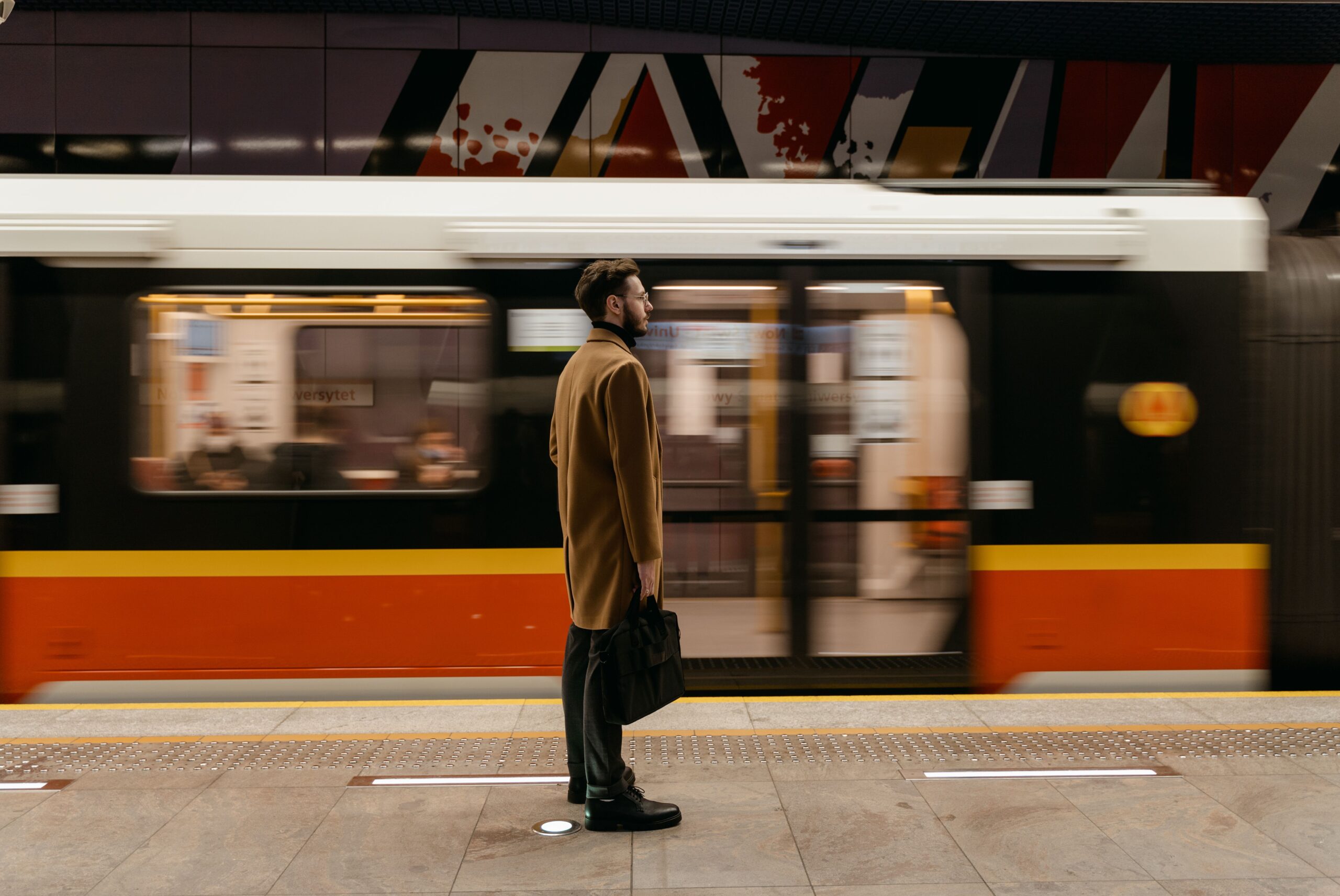
Summer once seemed endless. Now entire years appear to disappear. Psychology may help explain why time seems to speed up as we get older and what we can do about it.
Think back to a summer when you were a child. Six weeks could feel enormous. A school year seemed like a significant chapter of your life, and waiting a month for your birthday felt almost unreasonable.
Then adulthood arrives.
January becomes spring. Summer appears and disappears. Suddenly it is September again, and people are already talking about Christmas.
The clocks haven’t changed, of course. A year contains exactly as many hours at 45 as it did at 15. What changes is our experience of those hours and, crucially, how we remember them afterwards.
Research broadly supports the familiar impression that longer periods of life can seem to pass faster as we age. But the explanation is more complicated than simply getting older.
Why does life feel faster as you get older?
One of the most interesting explanations involves memory.
A boring afternoon can feel painfully slow while you’re living through it. Yet when you look back on a repetitive month, it can seem to have disappeared.
That’s because experiencing time in the moment and remembering a period afterwards are different psychological processes.
When we look back on the previous year, our brains don’t replay every hour. Instead, we reconstruct it from memories, events and changes.
And adulthood can contain considerably more repetition than childhood.
Childhood is full of firsts
Think about how many genuinely new experiences happen during the first decades of life.
Your first day at school. Your first trip without your parents. Your first kiss. Your first job. Learning to drive. Leaving home. Your first serious relationship.
Even ordinary experiences are new when you’re a child.
By adulthood, life can become much more predictable. You wake at roughly the same time, travel the same route, work with the same people and follow familiar evening routines.
There is nothing wrong with routine. It makes life manageable.
But repetitive periods can leave fewer distinctive landmarks in memory. A week in which very little changes may eventually merge with dozens of similar weeks.
By contrast, a short holiday somewhere new can feel surprisingly substantial when you remember it months later.
The holiday didn’t contain more time. It simply gave your memory more to work with.
Your brain remembers events, not every minute
Memory does not record life like a continuous video.
Our brains divide experiences into events. Entering a new place, beginning another activity or meeting someone can create what psychologists call an event boundary.
Research suggests these boundaries help organise memory and can influence how we later judge the duration of an experience.
Imagine two Saturdays.
On the first, you stay home, clean the apartment, watch television and scroll through your phone.
On the second, you take a train somewhere new, explore a market, have lunch in an unfamiliar restaurant and meet a friend.
Both contain 24 hours. But months later, the second may occupy considerably more space in your memory.
This doesn’t mean novelty literally slows the clock. It means a varied period may feel richer when reconstructed afterwards.
But novelty isn’t the whole explanation
The popular advice is simple: do more new things and life will feel longer.
The science isn’t quite that tidy.
Recent research suggests that routine and memorable events are only part of the picture. Attention, emotion, cognitive changes and how we evaluate periods of our lives can also influence our perception of time.
A 2026 study involving adults aged 20 to 91 found that older participants tended to perceive the preceding decade as having passed faster. Interestingly, this wasn’t significantly explained simply by older adults having fewer autobiographical memories.
Instead, differences in the ability to encode new information appeared to play a role.
So there probably isn’t one neat explanation for why life accelerates. Several psychological processes seem to interact.
What about the “percentage of your life” theory?
You may have heard that a year feels shorter because it represents a smaller percentage of your life.
When you’re five, one year is 20% of everything you’ve lived. At 50, it’s only 2%.
It’s an appealing idea, but it shouldn’t be treated as established science.
Researchers studying subjective time tend to focus instead on factors such as memory, attention, emotion, routine and cognitive processing.
The percentage theory captures something intuitive about ageing. It just doesn’t explain the phenomenon on its own.
Why being busy doesn’t necessarily help
There is another strange feature of adult life: you can be incredibly busy while feeling that the year has vanished.
Meetings, deadlines, emails, commuting and errands fill almost every available hour. Yet if those days repeatedly contain the same activities, they may not create many distinctive memories.
Busyness and variety are not the same thing.
That may help explain the peculiar feeling that every day is full while the months somehow disappear.
A packed life isn’t necessarily a memorable one.
Can you make life feel slower?
You cannot literally slow time. But you can give your memory more landmarks.
The answer doesn’t require filling every weekend with dramatic adventures. Small changes are enough to make days more distinctive.
Take a different route through your city. Visit somewhere you haven’t been before. Learn something difficult. Try a new sport. Go to an exhibition. Cook something you’ve never made. Meet someone somewhere unfamiliar rather than returning automatically to the same place.
The point isn’t to make your life look exciting.
It is to give your brain a reason to distinguish one period from another.
Pay more attention to ordinary life
Novel experiences won’t help much if you barely notice them.
Attention and memory are closely connected. When we move through our days automatically or constantly divide our attention between the real world and a screen, experiences may be encoded less richly.
That doesn’t mean smartphones are literally making life pass faster. The evidence doesn’t support such a simple claim.
But occasionally allowing yourself to notice where you are, who you’re with and what is happening may make ordinary experiences more memorable.
Not every empty moment needs to be filled.
Give your year chapters
Another useful approach is to create landmarks.
Plan something at the beginning of each season. Start a project with a clear beginning and end. Organise a weekend away. Learn a skill for three months. Change your running route. Host a dinner. Keep a simple record of places you visited or things you learned.
These experiences give memory something around which to organise itself.
Without landmarks, months can easily merge.
The goal isn’t to make every day unforgettable. A good life also needs repetition, familiar people, quiet weekends and ordinary evenings.
But when routine becomes so complete that one month is indistinguishable from the next, it may be worth introducing something new.
You can’t stop time, but you can give it shape
Getting older does appear to influence how quickly longer stretches of life seem to pass. But there is no single clock in the brain that suddenly starts running faster after 30.
Our sense of time is shaped by memory, attention, experience and how we interpret our lives.
So perhaps the better question isn’t, How do I make time slow down?
It is: What will I remember about this period of my life?
You cannot make a year contain more days. But you can give those days more variety, more attention and more experiences worth remembering.
Childhood offered novelty automatically. Adulthood often requires us to create it.
Further Reading
How to Become Mentally Stronger
Stay Connected
Subscribe to the Together Magazine newsletter for thoughtful features, personal development insights, cultural recommendations, museum exhibitions, events in Brussels and Belgium, and the latest stories delivered directly to your inbox.