



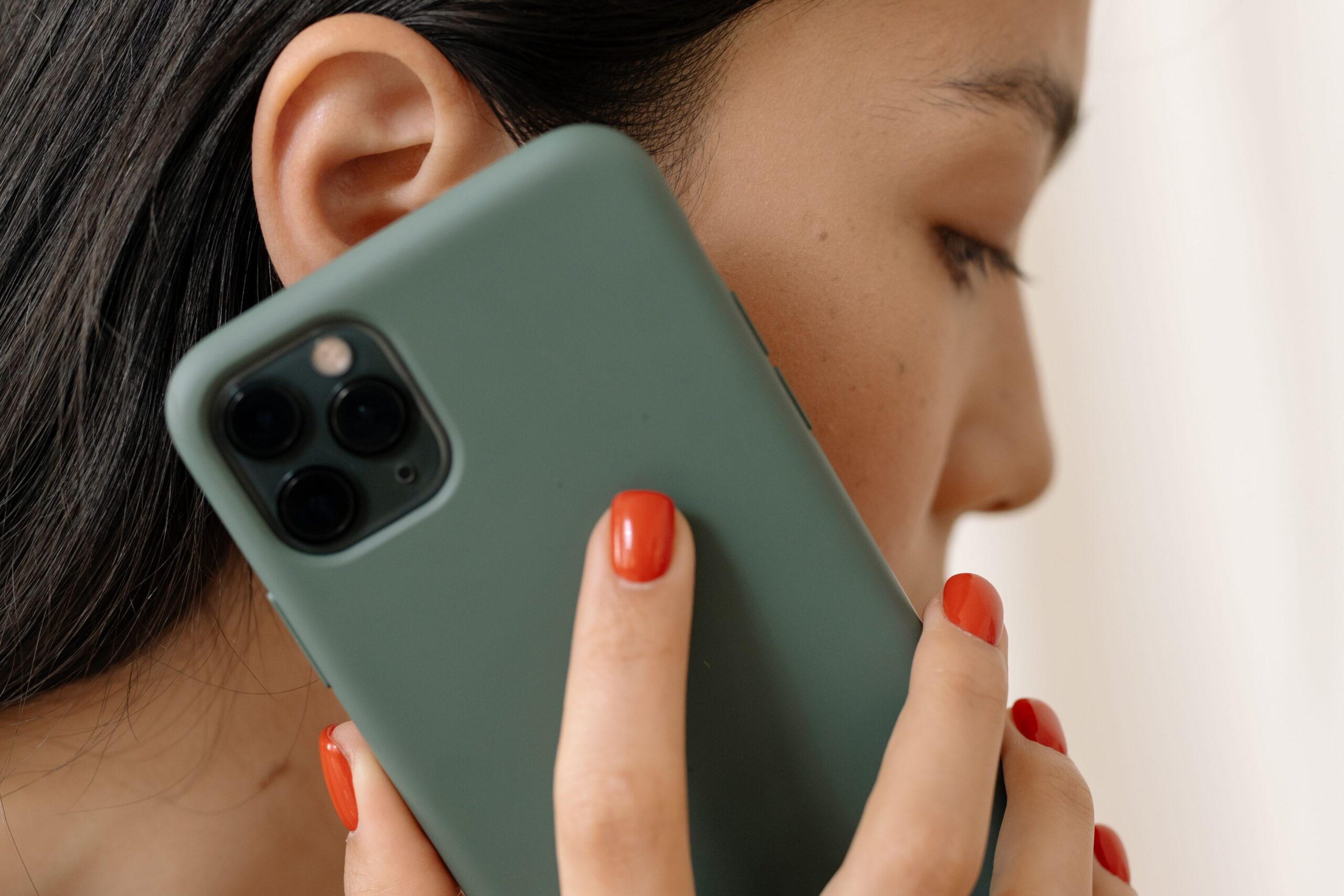
You mention a product in conversation. Hours later, an advert for it appears on your phone. It can feel too specific to be a coincidence. So is your phone secretly listening?
Technically, of course, your smartphone contains microphones and apps can use them. Voice calls, videos, voice assistants and audio messages would be impossible otherwise.
Modern smartphones, however, have controls around microphone access.
On an iPhone, apps must request permission to use the microphone. Apple also displays an orange indicator when an app is using it, while Control Centre can show which app recently accessed the microphone.
Android provides similar controls. Users can see which apps have accessed permissions through the Privacy Dashboard, change microphone permissions and, on supported versions, see a green indicator when the camera or microphone is being used.
So the microphone certainly can listen when a feature requires it. That is different from saying social-media and advertising apps are secretly recording every conversation around you.
What do the platforms say?
Meta, which owns Facebook and Instagram, explicitly denies using people’s microphones to secretly listen to conversations for advertising.
The company says it uses the microphone when permission has been granted and someone is actively using a feature that requires it, for example, recording video or using a voice feature.
Of course, a company’s denial shouldn’t be treated as independent proof that misconduct could never occur. Apps have faced numerous privacy controversies over the years, and users are right to scrutinise what permissions they grant.
But claims of mass covert microphone surveillance for advertising require evidence. At present, the much stronger documented story is about the enormous amount of information advertising companies can obtain without recording your conversations at all.
Your phone already knows an extraordinary amount
Think about the trail an ordinary day can create.
You search for a restaurant. Watch three videos about running. Browse a pair of trainers but don’t buy them. Open a weather app. Visit a news website. Like a photograph. Walk into a shopping centre. Search for a hotel. Put something into an online basket and abandon it.
Individually, these actions may seem insignificant.
Together, they can become remarkably informative.
The US Federal Trade Commission has documented extensive data collection across major social-media and video-streaming services, including the use of information for targeted advertising and the creation of interest-based categories.
Data brokers can add another layer. Information relating to interests, location and household characteristics can be bought, combined and used to build audiences for advertisers.
The result is that an advertising system doesn’t necessarily need to know what you said. It can make surprisingly good guesses based on what you have already done.
Why do the adverts feel so specific?
Suppose you talk to a friend about buying running shoes and later receive an advert for them.
The conversation is memorable. The dozens of other signals surrounding it probably aren’t.
Perhaps you recently watched running videos. Maybe you visited a sports website several days ago. Perhaps you searched for a local race, followed a fitness account or spent longer than usual looking at a particular product.
Advertising systems can use behavioural patterns to place people into audiences and predict what they may be interested in.
And sometimes the explanation is even simpler: running shoes are advertised to enormous numbers of people. You notice the advert because you have just talked about them.
Had the same advert appeared three days earlier, you might have scrolled past without remembering it.
Coincidence plays a bigger role than we think
Humans are extremely good at noticing meaningful coincidences. Imagine that you see hundreds of adverts over a week. Most have little relevance and are forgotten almost instantly.
Then one appears for the exact destination you discussed over dinner. That one gets your attention.
Psychologists sometimes describe related effects in terms of selective attention and frequency illusions: once something becomes salient to us, we begin noticing it more often.
This doesn’t explain every uncannily accurate advert. Modern advertising really can be extraordinarily targeted. But our own attention can make the effect feel even more remarkable.
We remember the advertisement that appeared after the conversation. We don’t remember the 50 irrelevant ones that came before it.
Location can reveal more than you realise
Where you go can also provide useful information.
The FTC has reported on the commercial use of data including precise location, browsing patterns and shopping behaviour. Such information can be used to infer interests and consumer characteristics.
You don’t necessarily have to type “I like skiing” into a search engine for an advertising system to develop that impression. Your digital behaviour may already suggest it.
This is one reason the idea of a phone listening can sometimes distract from the more important privacy question. Microphones are easy to understand: either something heard your conversation or it didn’t.
Modern data collection is far less visible.
A profile can be built from dozens or hundreds of signals that individually seem harmless.
So should you turn off your microphone?
There is no reason every app needs microphone access.
If an app has no obvious reason to use your microphone, you can remove the permission. Both iPhones and Android devices allow users to review which apps have requested access and change those permissions.
The same principle applies more broadly.
Review location permissions. Look at which apps can track activity across other services. Remove apps you no longer use. Pay attention when an app requests access to contacts, photos, Bluetooth or location and ask whether that access is genuinely necessary.
On iPhone, Apple’s App Tracking Transparency system also requires apps to request permission before tracking users across other companies’ apps and websites for advertising or sharing information with data brokers.
Privacy doesn’t require becoming paranoid about every permission request. It requires paying attention to what you are agreeing to.
Is your phone actually listening to you?
Sometimes, yes, in the ordinary sense that you have deliberately activated a voice assistant, recorded a video, made a call or given an app microphone access for a feature that uses it.
But the idea that major advertising platforms need to continuously record private conversations to explain eerily accurate adverts isn’t supported by good evidence.
And that may be the more important point.
The modern advertising industry has access to sophisticated ways of learning about people’s interests from searches, browsing behaviour, purchases, locations, app activity and other data.
The strange advert that appears after a conversation can therefore feel as though somebody must have been listening.
The reality may be that nobody needed to.
Further Reading
How to Become Mentally Stronger
Stay Connected
Subscribe to the Together Magazine newsletter for thoughtful features, personal development insights, cultural recommendations, museum exhibitions, events in Brussels and Belgium, and the latest stories delivered directly to your inbox.